
Precision-engineered in our 40,000 sq. m. factory using ASTM-certified structural steel and thermal insulation, tailored for Kenyan educational procurement.
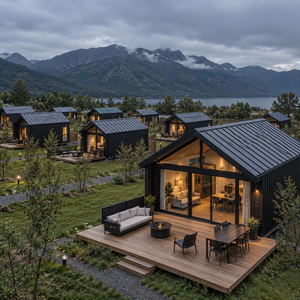
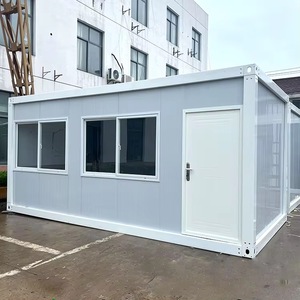
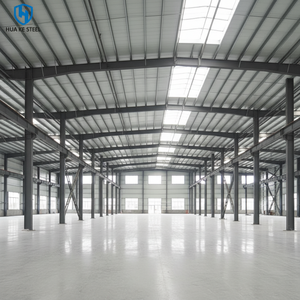
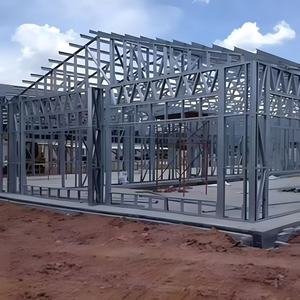
The Republic of Kenya is undergoing a profound structural evolution in its public and private educational sector. Driven by the full rollout of the Competency-Based Curriculum (CBC), the transition from the 8-4-4 system to the 2-6-3-3 structure has created an immediate requirement for over 15,000 Junior Secondary School (JSS) classrooms, specialized science laboratories, computer ICT hubs, and sanitation blocks across all 47 counties. Traditional stone masonry—plagued by prolonged timelines, site waste, vulnerability to seasonal rain delays, and escalating raw material costs—is increasingly unviable for meeting county and national completion deadlines.
As a leading China-based original equipment manufacturer (OEM) and structural steel design/build firm, our organization delivers turnkey, heavy-duty modular classroom systems specifically tailored to the tropical climatic conditions, logistical terrain, and regulatory standards of Kenya. Operating from a state-of-the-art 40,000 square meter automated fabrication facility, we integrate full-process design, structural stamping, cold-formed heavy-gauge galvanized steel frame production, high-density insulation paneling, and off-grid solar microgrids into a single factory-controlled workflow.
Modular layouts engineered to Ministry of Education floor plans, accommodating 40-50 students per unit with standardized natural lighting, cross-ventilation, and dedicated acoustics for modern interactive teaching.
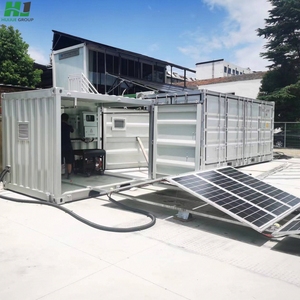
Optional integrated Helios Solar Arrays and IP65 Lithium Battery Energy Storage Systems (BESS) guarantee continuous power for digital literacy tablets, smartboards, and ICT equipment in non-electrified rural regions.
C4/C5 anti-corrosion hot-dip galvanization designed for coastal salt spray in Mombasa, coupled with high-density Polyurethane (PU) or Rockwool insulation to counteract intense equatorial heat in Turkana and Garissa.
Engineered modular classrooms supplied to the East African market must satisfy stringent physical and structural criteria. Unlike temporary lightweight tents or uninsulated single-skin containers, our modular classroom blocks utilize purpose-engineered steel chassis and insulated structural insulated panels (SIPs) rated for permanent institutional occupancy.
The primary load-bearing skeleton consists of cold-formed, high-tensile structural steel profiles. Columns and perimeter ring beams are fabricated from Q345B grade steel (equivalent to S355JR), featuring a minimum yield strength of 345 MPa. All structural members undergo hot-dip galvanization (zinc coating density ≥ 275 g/m²) to guarantee a 50+ year service life without structural degradation from rust or humidity.
Equatorial thermal regulation is critical for keeping classroom internal temperatures within the human comfort zone (21°C – 26°C) without reliance on grid-powered air conditioning. Wall panels consist of 50mm to 100mm double-sided color steel sandwich panels with core materials available in:
To assist procurement directors, school boards, international NGOs (such as UNHCR, UNICEF, and USAID), and county infrastructure ministers in making data-driven investment decisions, the matrix below details key performance indicators:
| Performance Indicator | China Steel Frame Modular Classroom | Conventional Kenyan Stone Masonry | Strategic Advantage |
|---|---|---|---|
| Construction Speed (Single Block) | 7 to 14 Days | 90 to 180 Days | 85% Faster Deployment |
| On-Site Material & Water Waste | Near Zero (< 2%) | High (20% – 30%) | Dry Construction (Saves Water in ASAL) |
| Seismic Rating | Magnitude 8.0 (Zone 4 Compliant) | Variable (Prone to cracking) | Superior Rift Valley Safety |
| Wind Resistance | 120 km/h (Upgradable to 180 km/h) | 80 - 100 km/h | High Structural Integrity |
| Thermal Insulation (U-Value) | 0.38 W/m²K (PIR Core) | 1.85 W/m²K (Concrete Block) | 79% Better Heat Shielding |
| Foundation Requirements | Simple Pier / Slab Footings | Deep Continuous Strip Footing | 60% Reduction in Substructure Cost |
| Relocatability / Scalability | 100% Demountable & Re-usable | Zero (Permanent Demolition) | Flexible Campus Asset |
From the moisture-laden coastal salt air of Mombasa to the remote, off-grid tracts of Turkana, modular classroom structures must be specialized for site-specific conditions.
When sourcing from our factory, educational procurement teams eliminate middleman markups and gain total quality control directly from our engineering team.
• 40,000 m² Automated Production: CNC plasma cutting, automatic welding robotics, and electrostatic powder coating lines.
• 30%–50% Timeline Savings: Factory manufacturing occurs concurrently with local site excavation and foundation prep in Kenya.
• Turnkey Logistics to Mombasa Port: Standardized ISO dimensioning allows 4 flat-pack units or modular components to fit into a single 40ft HQ container for cost-effective sea shipping.
Send an InquiryYes. All our modular classroom designs are engineered to conform to Eurocode 3 (Steel Design) and British Standards (BS 5950), which form the foundation of Kenya’s structural engineering codes. Floor plans are customized to meet the minimum space requirements per pupil (1.5 m² per student) mandated by the Ministry of Education for JSS and primary institutions.
Modules are packed either as flat-pack container units (SOC - Shipper Owned Containers) or knocked-down structural steel bundles. They ship via direct container vessels from ports like Shanghai, Ningbo, or Qingdao to the Port of Mombasa, with an ocean transit time of approximately 22 to 28 days. Once cleared through KRA and KEBS (PVOC pre-export verification of conformity), goods are dispatched via the SGR freight service or truck transport to Nairobi and outer counties.
Modular classrooms require significantly less substructure than heavy masonry. In firm soil conditions, simple concrete pier pads under the frame corner blocks are sufficient. In expansive black cotton soil (common in parts of Nairobi and Athi River), a simple reinforced concrete slab (100mm–150mm thickness) or short micro-piles are recommended. Detailed foundation engineering drawings are supplied by our technical team prior to shipment.
Our units utilize 75mm or 100mm Polyurethane (PU) or Polyisocyanurate (PIR) core sandwich wall panels combined with double-layer insulated roof assemblies. This creates an airtight thermal envelope with a low heat-transfer coefficient (U-value < 0.35 W/m²K), keeping internal ambient temperatures up to 10°C cooler than outdoor conditions under peak tropical solar exposure.
Absolutely. We offer complete off-grid solar classroom integration, including roof-mounted monocrystalline PV solar panels, hybrid inverters, and IP65 lithium iron phosphate (LiFePO4) battery packs. Roof profiles are engineered with integrated perimeter eaves, heavy-duty PVC or aluminum gutters, and downspout connectors for immediate routing into tank storage systems.
No specialized heavy construction machinery is required for standard 1-story flat-pack units. A team of 4 to 6 local workers equipped with standard electric hand tools (impact drivers, riveters, levels) and a light mobile crane or forklift can fully erect a standard 54 m² classroom in just 1 to 2 days. Detailed 3D step-by-step installation manuals and video guides are provided, and factory installation supervisors can be dispatched upon request.
The structural steel chassis has a design life exceeding 50 years. The hot-dip galvanized and powder-coated steel panels require virtually zero structural maintenance. Routine maintenance is limited to periodic cleaning of gutters, inspection of sealant joints every 5-7 years, and standard interior repainting if custom drywall finishes are installed.
Our manufacturing facility operates under ISO 9001:2015 quality management systems. Every shipment destined for Kenya undergoes third-party inspection (such as SGS, Intertek, or Bureau Veritas) to obtain the mandatory Certificate of Conformity (CoC) required by the Kenya Bureau of Standards (KEBS) prior to loading at the Chinese port.
Streamlining international procurement is vital for school administrators and project contractors. Our structured workflow ensures clarity, compliance, and on-time delivery:
Reviewing student capacity, site topography, county regulations, and custom layout requirements.
Calculation of wind, seismic, and live loads; production of CAD/BIM structural drawings.
Cold-roll forming of Q345B steel frames, sandwich panel manufacturing, and electrical pre-wiring.
Third-party PVOC quality inspection, CoC certification, container packing, and shipment to Mombasa.
Direct flatbed truck delivery from Mombasa Port / Nairobi SGR depot to school grounds in any county.
On-site assembly, MEP final connections, interior fit-out completion, and institutional handover.
Whether you are procuring Junior Secondary School CBC classrooms, setting up university research pods, or building off-grid rural education centers, our engineering team is ready to deliver cost-efficient, hurricane- and earthquake-resilient structures.