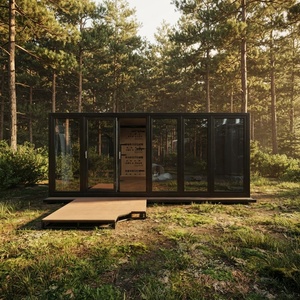

Pre-engineered offsite modular units customized for rapid marine transport, coastal gale resistance, and harsh island climates.
A rigorous engineering approach to exporting prefabricated modular structures to the North Sea and Baltic Sea territories.
Developing commercial, hospitality, or municipal infrastructure across German island networks—including the North Frisian Islands (Sylt, Föhr, Amrum), East Frisian Islands (Norderney, Borkum, Juist, Langeoog), Heligoland (Helgoland), and Baltic coast destinations (Rügen, Usedom, Fehmarn)—presents extraordinary supply chain, environmental, and regulatory hurdles. Traditional on-site "wet trade" construction is rendered financially unviable due to astronomical freight surcharges, severe tidal windows, extreme labor shortages (Fachkräftemangel), and strict municipal quiet periods (Ruhezeiten) during peak tourist seasons.
As a leading international designer, manufacturer, and exporter of heavy-gauge steel frame modular buildings and engineered container structures, our firm delivers fully finished offsite modular solutions tailored specifically for the German market. Built inside controlled manufacturing environments, our modular buildings arrive on-site up to 90% pre-commissioned, drastically shortening island installation timelines from months down to a matter of days.
Exporting structural modular units into the Federal Republic of Germany requires strict adherence to Eurocodes and German national annexes. Our engineering office ensures every structural module satisfies the following key compliance frameworks:
Engineered cold-formed or hot-rolled steel frame skeletons engineered for high torsional rigidity during sea transport, heavy crane lifts, and unyielding island foundation setups.
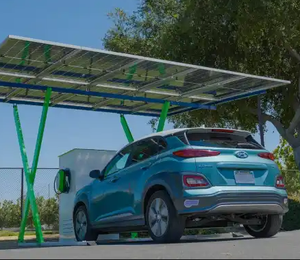
Integrated rooftop PV solar systems paired with industrial Battery Energy Storage Systems (BESS) for grid-independent operation on ecologically sensitive or under-powered islands.
Multi-layer marine protective coatings applied in factory spray booths, preventing micro-pitting, rust creeping, and degradation from constant saline-laden coastal air.
Factory-installed mechanical, electrical, and plumbing infrastructure configured to German VDE and DIN standards for rapid, low-labor connection upon arrival.
Evaluating economic efficiency, schedule mitigation, and structural performance in German coastal territories.
| Evaluation Criteria | Export Modular Steel Frame | Repurposed ISO Shipping Containers | Traditional On-Site Construction |
|---|---|---|---|
| On-Site Construction Schedule | 2 to 7 Days (Plug & Play) | 1 to 2 Weeks | 6 to 14 Months |
| German GEG Thermal Compliance | Fully Compliant (U < 0.14) | Requires Thick Internal Insulation | Compliant (High Labor Cost) |
| Corrosion Resistance Class | ISO 12944 C5-M Marine Grade | Standard Corten + Touchup | Varies by Facade Choice |
| Ferry & Island Transport Risk | Optimized Weight & Lifting Points | Standard ISO Dimensions | High Risk / Multiple Shipments |
| Sensitivity to Season (Ruhezeiten) | Zero Noise Disruptions | Minimal Disruptions | Blocked During Peak Tourism |
| Structural Life Expectancy | 50+ Years (Eurocode 3) | 25–35 Years | 50+ Years |
Purpose-built modular configurations tailored for hospitality operators, commercial enterprises, and municipal projects.

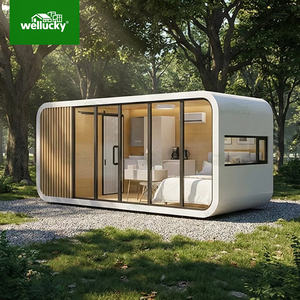
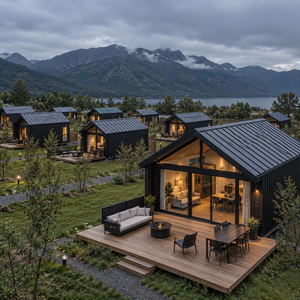
Luxury tourism on islands like Sylt demands fast luxury expansion without environmental scarring. Our steel frame modular suites feature triple-paned floor-to-ceiling glass, high-end interior joinery, and integrated heat pump climate systems. Units are built complete offsite, shipped via RoRo ferry, and installed in a single day—allowing resort owners to open high-margin rooms before the summer season begins.

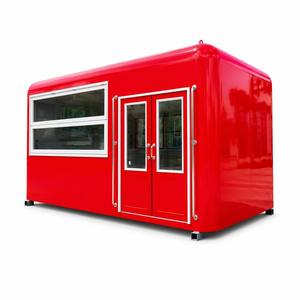
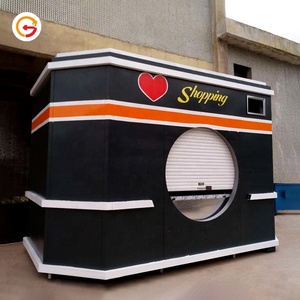
Beachfront dining, cocktail bars, and QSR (Quick Service Restaurants) along North Sea island promenades must endure brutal winter salt spray while operating seamlessly during summer peak traffic. Our container-based F&B modules incorporate commercial-grade stainless steel interior surfaces, integrated grease traps, automated security shutters, and hydraulic deck extensions for outdoor customer seating.

Heligoland serves as a crucial operations and maintenance hub for offshore wind farms in the German Bight. Our heavy-duty steel frame modules provide secure, climate-controlled staff quarters, laboratories, and command centers equipped with redundant energy systems, emergency back-up generators, and robust airtight seals to combat continuous ocean spray and micro-particulates.
German island contractors face a severe deficit of certified tradespeople. Prefabricating 90% of the building inside a factory mitigates local labor bottlenecks completely, transferring construction tasks offsite to expert technicians.
With Germany aiming for climate neutrality by 2045, municipal authorities on islands like Juist and Spiekeroog restrict fossil-fuel construction equipment. Offsite modular installation produces up to 70% lower site carbon emissions.
German commercial developers increasingly demand DGNB (German Sustainable Building Council) credentials. Modular steel frames allow easy disassembly, material separation, and circular economy reuse under the Kreislaufwirtschaftsgesetz.
Combining American modular engineering innovation with stringent European compliance, our firm operates a state-of-the-art 40,000 sq. ft. manufacturing plant in Houston, Texas, paired with a dedicated design and engineering studio in Denver, Colorado. As an employee-owned enterprise, our architects, structural engineers, certified welders, and logistics managers take personal accountability for every module stamped and shipped.
From architectural conceptualization, static engineering calculations under Eurocode, code-compliance review, to factory production and international ocean freight management—our team handles the entire lifecycle. German procurement teams deal with one accountable partner, eliminating costly handoff errors between separate architects, factories, and freight forwarders.
Whether craning mid-mountain hospitality lodges at extreme altitudes (such as the Lynn Britt Cabin at Aspen Snowmass) or shipping complete off-grid solar-powered beach clubs to remote Caribbean islands (such as the Coconut Club in Exuma), our engineering team excels in projects where site access is restricted and local resources are scarce.
Addressing structural engineering, freight logistics, customs, and building permits for island delivery.
We work directly with specialized marine logistics forwarders and local ferry operators (e.g., Reederei Norden-Frisia, Wyker Dampfschiffs-Reederei). Modules are engineered with specific lifting lug points and dimensioned to match standard flat-rack containers or trailer frames suitable for RoRo ferry transit and light island cranes.
Yes. We engineer thermal insulation packages using high-density polyurethane (PUR/PIR) core panels, vacuum insulation, and thermally broken aluminum or steel window systems. All structural designs undergo thermal bridging analysis to ensure full GEG compliance for year-round commercial use.
Every exposed steel component undergoes grit blasting to SA 2.5 standard followed by a multi-coat marine paint system rated to ISO 12944 Class C5-M (Very High Industrial/Marine). Fasteners and hardware are hot-dip galvanized or fabricated from 316-grade stainless steel.
Absolutely. We specialize in off-grid energy integration featuring our Helios rooftop solar arrays, modular Battery Energy Storage Systems (BESS), rainwater collection, greywater treatment, and energy-efficient heat recovery ventilation (HRV) units.
We supply complete structural static calculation packages (Prüffähige Statik) drafted in accordance with Eurocode 1 (DIN EN 1991 for wind/snow loads) and Eurocode 3 (DIN EN 1993 for steel structures), allowing your local German architect or Prüfingenieur to expedite local building permit approvals (Baugenehmigung).
Factory fabrication typically requires 8 to 12 weeks following final engineering drawings. Ocean shipping to ports like Hamburg or Bremerhaven takes approximately 2 to 3 weeks, followed by immediate ferry transfer to the target island. Total delivery is 30–50% faster than local traditional construction.
Partner with an award-winning modular manufacturer that understands marine engineering, German energy codes, and complex island logistics. Contact our engineering team for technical consultations, budgetary estimates, and structural specifications.