An authoritative engineering and economic assessment for Department of Education (DepEd) planners, municipal LGU officials, private school developers, and international institutional donors.
The Republic of the Philippines faces a structural challenge in educational infrastructure. With an archipelagic geography spanning over 7,600 islands, rapid population expansion, and severe environmental vulnerabilities, traditional site-built masonry construction (Concrete Hollow Block or CHB) has consistently struggled to eliminate the nation’s severe classroom shortage. Conventional construction in remote barangays and island provinces suffers from astronomical logistics costs, erratic material quality, extended project delivery timelines, and vulnerability to natural disasters.
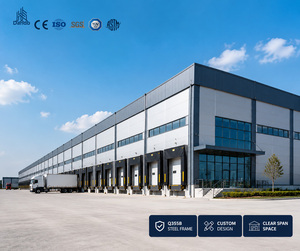
As premier global designers and offsite modular construction manufacturers, our engineering group brings industrial-grade steel frame modular classroom solutions specifically configured for the microclimates and structural codes of the Philippines. Operating from our state-of-the-art 40,000 sq. ft. manufacturing facility, we integrate structural steel engineering, thermal science, anti-corrosion marine protection, and off-grid solar readiness into turnkey classroom modules. By executing up to 90% of the building process offsite in a controlled factory environment, we enable educational institutions across Manila, Cebu, Davao, and remote island communities to achieve 30% to 50% faster project completion while ensuring 100% compliance with the National Structural Code of the Philippines (NSCP).
Every modular classroom is designed from first principles to survive the extreme climate stress vectors of the Western Pacific Typhoon Belt and the Pacific Ring of Fire.
Fabricated using heavy-gauge cold-formed steel and structural Q355B steel chassis engineered to withstand sustained wind velocities exceeding 280 km/h (175 mph), meeting NSCP Zone 1 super typhoon standards.
Featuring welded moment-resisting steel frameworks and flexible inter-modular connection plates that absorb and dissipate lateral seismic kinetic energy during high-magnitude earthquake events.
Protected by multi-layer epoxy zinc-rich primers and aliphatic polyurethane topcoats, delivering 25+ years of resistance against salt air oxidation in coastal island barangays.
Walls and roof systems feature continuous Polyurethane (PU) or Rockwool cores (50mm–100mm) reducing solar heat gain, maintaining indoor temperatures at 24°C with minimum HVAC power load.
High Sound Transmission Class (STC) wall partitions minimize heavy tropical rain impacts on metal roofing, ensuring clear teacher-student verbal communication during monsoons.
Non-combustible Class A fire-rated structural insulation panels (SIPs) certified for 1 to 2 hours of structural fire resistance, prioritizing pupil and teacher safety.
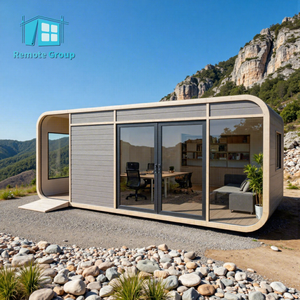
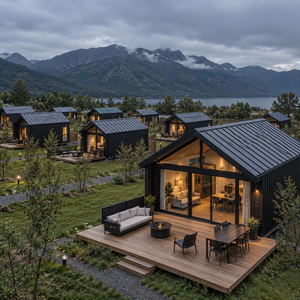
From dense urban campuses in Metro Manila to off-grid island schools in Palawan and Samar, our modular building systems adapt seamlessly to diverse physical and economic topographies.
Designed to strictly match standard 7m x 9m DepEd classroom dimensions. Factory pre-engineered units can be assembled in clusters of 2, 4, or 8 classrooms to rapidly eliminate shift-teaching backlogs in high-density municipalities.
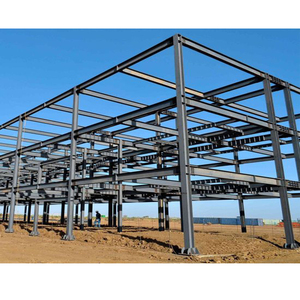
Heavy structural steel framing allows vertical expansion up to 3 stories. Ideal for private school chains and urban universities in Manila, Quezon City, and Cebu needing modern computer labs, lecture halls, and administrative wings on tight footprints.
Integrated with rooftop PV solar arrays and lithium battery storage systems (BESS). These self-sufficient educational modules bring digital learning, lights, and air conditioning to un-electrified island barangays without reliance on local power grids.
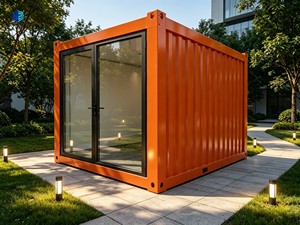
Following severe volcanic or super typhoon events, flat-pack modular container units can be sea-freighted and erected within 48 hours per unit, providing safe, storm-proof learning spaces to replace destroyed infrastructure.
Pre-wired and pre-plumbed factory modules designed for TESDA-accredited vocational training centers, robotics labs, culinary arts kitchens, and industrial skills workshops across regional economic zones.
Turnkey educational facilities deployed by corporate CSR initiatives and agricultural/mining enterprises operating in remote Mindanao and Northern Luzon interior sectors, complete with sanitary washrooms and teacher quarters.
Institutional procurement is undergoing a paradigm shift driven by green building standards, climate adaptation policies, and public-private partnership (PPP) fast-tracking.
Modern Methods of Construction (MMC) are gaining aggressive momentum among Philippine LGUs and private educational trusts. By shifting up to 90% of labor into precision offsite factories, project owners bypass unpredictable tropical weather delays, site material theft, and regional skilled labor shortages. The result is a predictable, locked-in budget with zero surprise overruns.
Educational institutions are prioritizing environmental stewardship under the Philippine Green Building Code and BERDE (Building for Ecologically Responsive Design Excellence) standards. Our steel frame modular buildings utilize 100% recyclable structural steel frames, zero-VOC interior finishes, energy-efficient LED lighting, and high-performance insulation that cuts campus HVAC electricity consumption by up to 40%.
Municipalities across Eastern Visayas and Bicol are specifying modular classrooms designed as dual-use facilities. During normal school months, they serve as state-of-the-art learning environments; during severe typhoon evacuations, their reinforced steel frame structure and integrated sanitation systems provide safe, certified emergency evacuation shelters for local communities.
The Philippine government and private school networks are expanding Public-Private Partnerships (PPP) to accelerate school building programs. Our single-source design/build workflow—spanning initial architectural engineering, offsite production, ocean transport logistics, site foundation prep, and crane installation—delivers the exact turnkey model requested by institutional investors.
A direct quantitative comparison demonstrating why offsite steel modular construction provides superior return on investment and risk mitigation in the Philippines.
| Evaluation Criteria | Factory Steel Frame Modular | Traditional Site-Built CHB | Strategic Benefit to Buyer |
|---|---|---|---|
| Project Delivery Schedule | 30–50% Faster (Parallel site prep & factory fabrication) | Sequential (Slow, prone to monsoon rain delays) | Immediate elimination of classroom overcrowding; rapid revenue for private schools. |
| Super Typhoon Resistance | Rated up to 280+ km/h (Engineered steel chassis & high-strength anchors) | Vulnerable to roof truss uplift and structural cracking during Category 5 typhoons | Guaranteed structural survival; zero total-loss rebuilding costs post-storm. |
| Seismic Performance | High ductility, welded structural steel joints (NSCP Zone 4 certified) | Brittle concrete masonry prone to catastrophic cracking and wall shear failures | Maximum life safety for students and staff during major earthquake events. |
| Quality Assurance / QC | Strict factory ISO 9001 quality control and laser-guided fabrication | Variable manual labor quality, inconsistent concrete mix on remote sites | Flawless structural alignment, superior wall fit/finish, zero material wastage. |
| Thermal Comfort & HVAC Cost | Continuous PU/Rockwool core panels (U-Value < 0.35 W/m²K) | High thermal mass CHB walls radiate absorbed heat inward all afternoon | Lower ambient temperature indoors; up to 40% reduction in monthly electricity bills. |
| Archipelagic Logistics | Standardized ocean container shipping dimensions; lightweight modules | Costly bulk transport of sand, gravel, cement bags, and hollow blocks to islands | Reduced freight cost to Visayas & Mindanao; minimal local environment damage. |
| Asset Relocatability | 100% Relocatable & Modular (Can be unbolted and moved) | Permanent structure (Demolition required if land lease ends) | Future-proof flexibility; buildings can adapt as population density shifts. |
Combining decades of global modular engineering mastery with dedicated logistics channels serving Philippine ports in Manila, Cebu, CDO, and Davao.
Our climate-controlled offsite manufacturing facility operates with high-precision automated steel framing machinery, robotic welding, and automated panel bonding lines—producing up to 50 modular units monthly with absolute dimensional accuracy.
We eliminate contractor friction. Our in-house structural engineers, architects, MEP specialists, and logistics coordinators manage your project from initial CAD drafting through factory fabrication, ocean customs clearance, and final on-site installation.
Every design plan is fully stamped by licensed structural engineers. We provide complete engineering documentation, wind load calculations, and material mill test certificates required for fast-track LGU building permit approval across all Philippine regions.
Clear, transparent, technical answers addressing logistics, compliance, foundations, and financial parameters for modular classroom buyers.
Yes. Our engineering team custom-configures modular building layouts to match or exceed standard DepEd classroom dimensional requirements (such as 7m x 9m or 9m x 9m floor plans). We integrate correct ceiling height clearances (minimum 2.7m to 3.0m), dual-access emergency egress doors, cross-ventilation window placement, LED lighting layouts, and pre-wired electrical conduit networks that align with Philippine national school building specifications.
Our modular classrooms are engineered for optimal maritime transport. They can be shipped either as ISO-dimensioned flat-pack modules (allowing up to 4 units to be packed in a single 40ft High Cube container slot) or as fully pre-assembled volumetric pods. They arrive via international container shipping at major hub ports such as Manila (MICP/South Harbor), Cebu International Port, Cagayan de Oro (CTPT), or Davao (Sasa Port), where local inter-island barges transport them directly to target island job sites.
Modular steel frame buildings require significantly less site foundation work than heavy concrete masonry. Depending on local soil bearing capacity, they can be set on simple reinforced concrete pier footings, strip footings, or a flat 100mm reinforced concrete slab. This reduces site excavation civil work costs by up to 60% and allows installation on steep terrain or soft soil areas where conventional heavy building construction would fail or require expensive piling.
Our buildings incorporate high-density polyurethane (PU) or rockwool insulation cores fully encased within galvanized structural steel skins. This continuous insulation barrier prevents thermal bridging, reflecting radiant solar heat and keeping internal temperatures comfortable. For monsoon rains, insulated sandwich roof panels eliminate the deafening drum effect common with standard single-sheet corrugated tin roofs, maintaining an acoustic STC rating suitable for quiet learning environments.
Yes. We regularly supply off-grid solar classroom solutions equipped with roof-integrated monocrystalline solar panels, MPPT charge controllers, inverter systems, and Lithium Iron Phosphate (LiFePO4) Battery Energy Storage Systems (BESS). These systems can power ceiling fans, LED lighting, teacher laptops, interactive whiteboards, and internet routers 24/7 without needing a utility grid connection.
When engineered with hot-dip galvanized structural frames and C4/C5 marine epoxy coatings, our modular steel buildings possess a design service life of 50+ years. They require minimal routine maintenance compared to timber or masonry structures, which are susceptible to termite damage, concrete spalling, and moisture intrusion rot.
A standard order of 4 to 10 modular classrooms typically requires 15 to 20 days for factory precision manufacturing and assembly, followed by 10 to 14 days of ocean transit to Philippine ports. On-site positioning, crane erection, structural bolting, and utility interconnections usually take less than 5 to 7 days, allowing total project delivery in under 45 days from contract signing.
Consult directly with our offsite modular structural engineering team. We provide complimentary preliminary floor plan reviews, wind/seismic load calculations, and landed freight estimates to any port or municipality in the Philippines.