
Australia Modular Restroom Infrastructure: Comprehensive OEM Engineering Guide
The Australian commercial construction, municipal infrastructure, and resource sectors are undergoing a structural shift toward pre-engineered, offsite modular construction. Facing severe regional trade shortages, escalating labor costs in remote hubs like the Pilbara and Bowen Basin, and demanding council approval mandates, procurement directors increasingly rely on certified international OEM partners to deliver fully finished modular restroom units.
However, exporting commercial modular restroom units into Australia requires strict adherence to localized structural codes, accessibility laws, and hydraulic standards. A standardized global unit will fail council inspection unless engineered specifically for Australia's unique climate zones—ranging from extreme UV exposure and coastal salinity to Category D tropical cyclones and high bushfire attack levels (BAL).
Key Takeaway for Australian Buyers: OEM factory modular units must achieve dual compliance: Structural engineering under AS/NZS 1170, accessibility under AS/NZS 1428.1 (DDA regulations), and plumbing compliance certified to WaterMark specifications (WMTS-052/WMTS-020). Without these certifications, units cannot be legally connected to Australian municipal or mining site wastewater infrastructure.
1. Compliance with AS/NZS 1428.1: Disability Access (DDA Standards)
Public amenities and workplace facilities across Australian Capital Territory, New South Wales, Victoria, Queensland, Western Australia, South Australia, Northern Territory, and Tasmania must strictly comply with the Disability Discrimination Act (DDA) via AS/NZS 1428.1. Our custom OEM modular restroom manufacturing process integrates compliant spatial geometries right from the initial CAD structural framework stage:
- Clear Circulation Space: Minimum $1900\text{mm} \times 2300\text{mm}$ unobstructed internal floor dimensions for Unisex Accessible Sanitary Compartments, allowing smooth 360-degree wheelchair turning clearance.
- DDA Fixtures & Hardware: Stainless steel 316 continuous grab rails engineered to withstand a minimum 1.1kN point force, single-lever sensor taps, and flush buttons mounted within the mandated 600mm–1100mm height zone from finished floor level.
- Luminance Contrast & Tactile Indicators: Toilet seats, grab rails, and door hardware feature a minimum 30% luminance contrast against surrounding wall and floor surfaces to assist visually impaired users, alongside compliant braille and tactile door signage.
2. Structural Resilience: Cyclone Region C/D & Coastal Salinity Engineering
Australia hosts some of the world's most severe atmospheric environments. Restroom modules slated for the Pilbara (Port Hedland, Karratha) or Far North Queensland (Cairns, Weipa) must withstand extreme wind loads up to Wind Region D (ultimate wind speeds exceeding 88 m/s or 316 km/h).
Our factory utilizes heavy-duty C450 structural steel chassis and continuous welded cold-formed steel frames. Structural elements undergo hot-dip galvanizing with a minimum $Z450$ zinc coating weight ($450 \text{ g/m}^2$) to achieve severe marine corrosion resistance (C4/C5 atmospheric rating according to AS 2312). Wall paneling utilizes high-density Polyisocyanurate (PIR) or non-combustible Mineral Wool cores sandwiched between 0.6mm architectural pre-painted galvanized steel skins (Colorbond® equivalent finish).
| Engineering Feature | Australian Standard / Regulatory Target | Our OEM Factory Specification |
|---|---|---|
| Disability Access | AS/NZS 1428.1:2021 (DDA Compliance) | Integrated 360° turning circle, compliant grab rails, tactile signage & sensor fixtures |
| Plumbing Certification | WaterMark (WMTS-052 / WMTS-020) | AS 3500 compliant copper/PEX water lines, HDPE waste manifolds, 4.5/3L dual-flush suites |
| Structural Wind Loading | AS/NZS 1170.2 (Region A to Region D) | Engineered C450 steel framing rated for cyclonic wind speeds up to 88 m/s (Region D) |
| Electrical Installation | AS/NZS 3000:2018 (Wiring Rules) | Pre-wired RCD protected sub-boards, IP65 waterproof LED fixtures, emergency exit lighting |
| Bushfire Resistance | AS 3959:2018 (BAL-40 / BAL-FZ) | Non-combustible mineral wool cores, toughened safety glass, seals preventing ember attack |
| Thermal Insulation | NCC Volume 1 & 2 (Section J Compliance) | R-3.5 roof insulation, R-2.5 wall paneling, double-glazed low-E thermal breaks |
Localized Australian Application Scenarios
Our factory custom-builds modular restroom, shower, and ablution buildings tailored to distinct market segments across Australia:
Scenario A: Remote Mining Camps & Resources Infrastructure (WA & QLD)
Resource sites require rugged, low-maintenance, relocatable ablution blocks. Our multi-stall male/female modular restroom units are designed for rapid crane drop placement onto concrete footings or earth screw piles. Featuring heavy-duty vinyl flooring hot-welded with coved skirting, chemical-resistant HDPE partitions, and high-capacity exhaust fan systems, these units handle 24/7 rotational shifts while resisting iron ore dust and intense heat.
Scenario B: Coastal Eco-Resorts & National Parks (TAS, SA & Northern Rivers)
In environmentally sensitive wilderness zones (such as coastal national parks or eco-tourism lodges), connecting to a municipal sewer main is often impossible. We manufacture specialized self-contained off-grid restroom modules featuring integrated solar power (Helios panels + lithium battery storage), rain harvesting roofs, low-draw vacuum flush toilets, and subterranean blackwater holding tanks or aerobic greywater filtration systems.
Scenario C: Civil Construction Corridors & Urban Infrastructure (NSW & VIC)
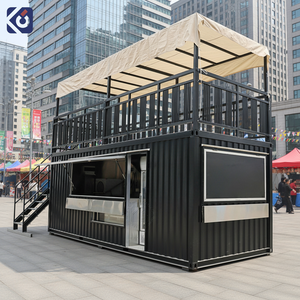
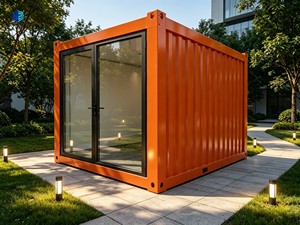
Major infrastructure construction projects in Sydney, Melbourne, and Brisbane require temporary yet robust worker amenities. Our stackable containerized restroom units fit standard ISO footprints, allowing site managers to stack units 2 to 3 stories high in tight urban work zones, maximizing ground space for machinery.
Scenario D: Municipal Parks, Sporting Grounds & Foreshores
Local councils across Australia demand vandal-resistant public toilets with low life-cycle maintenance costs. Our OEM factory builds architecturally refined public amenity blocks incorporating anti-graffiti powder coating, automated timed door locks, stainless steel anti-vandal sanitary fixtures, natural cross-ventilation louvers, and integrated DDA-compliant unisex compartments.
Offsite OEM Fabrication vs. Traditional Site Construction
Building masonry public restrooms on-site in regional Australia exposes projects to unpredictable weather disruptions, soaring contractor day-rates, and extended council site occupation permits. Factory-built steel modular units eliminate site disruption by shifting 90% of structural assembly into a quality-controlled factory environment.