
Explore our certified prefabricated steel buildings, engineered for multi-industry deployment from enterprise manufacturing facilities to remote commercial complexes.
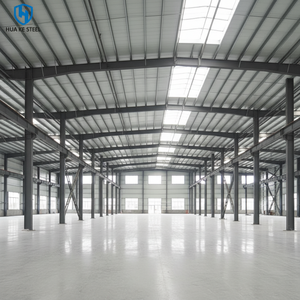
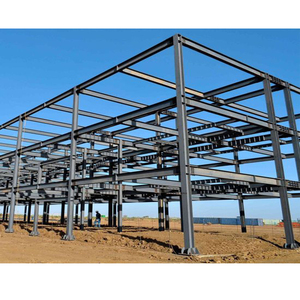
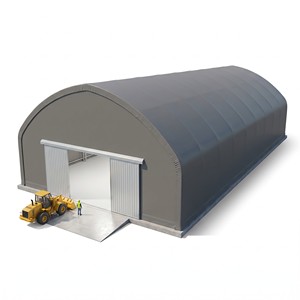
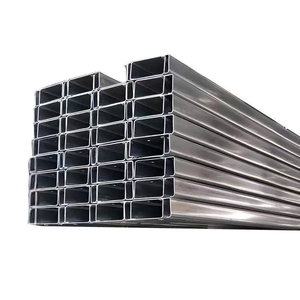
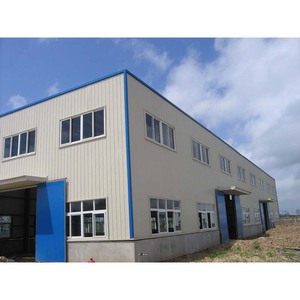
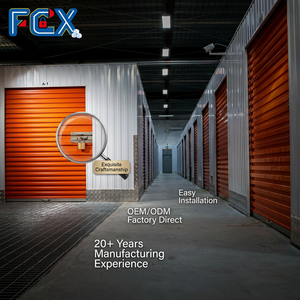
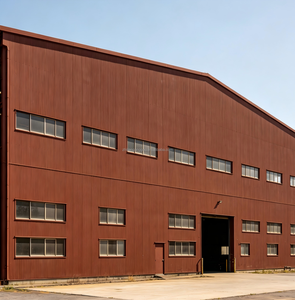
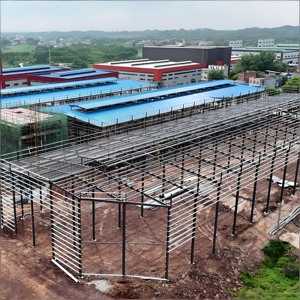
As the industrial heartland of Japan’s Chubu region, Nagoya demands structural solutions that combine rigorous engineering precision, earthquake resistance, and rapid deployment capabilities.
Greater Nagoya (including Toyota City and Kariya) serves as Japan's premier automotive and machinery hub. Our prefabricated modular steel structures provide high-span, crane-ready industrial workshops and satellite storage spaces designed to integrate seamlessly into Tier-1 and Tier-2 supply chain networks.
Handling the highest trade value of any port in Japan, the Port of Nagoya requires heavy-duty logistics facilities capable of withstanding harsh coastal salt fog and typhoons. Our marine-grade galvanized steel structures offer superior anti-corrosion longevity for container yards and bonded logistics centers.
Addressing urban spatial density in Nagoya’s commercial zones, our multi-story modular steel framing supports modern multi-tenant corporate offices, research and development annexes, and high-density workforce accommodation units engineered for maximum thermal comfort.
Japan is located along the Pacific Ring of Fire, making structural safety and earthquake resilience the single highest priority for any commercial structure built in Nagoya. Our modular steel buildings are engineered using high-ductility Q235B and Q355B structural steel, conforming closely with Japanese JIS G3101 and JIS G3106 standards.
By shifting structural weight from traditional heavy masonry to engineered light-gauge and heavy steel module framing, the seismic inertia forces acting on the structure during ground acceleration are dramatically reduced. Every connection point utilizes high-strength moment-resisting bolted connections, ensuring your building maintains structural integrity under severe seismic events.
Furthermore, our in-house structural engineering staff performs full 3D FEM structural simulation modeling (finite element method) to calculate localized snow loads, seismic drift coefficients, and extreme wind uplift forces custom-tailored to Aichi Prefecture’s regional code parameters.

The Japanese construction ecosystem is undergoing a fundamental structural transformation driven by demographics, environmental mandates, and legislative reforms.
With the implementation of Japan’s revised Labor Standards Act ("Work-Style Reform Law") capping construction overtime hours, traditional site-built construction in Japan faces severe labor constraints and surging sub-contractor costs. Importing prefabricated modular steel buildings from our direct-wholesale factory allows developers in Nagoya to shift up to 85% of labor hours from the job site into our controlled factory environment, reducing total site construction schedules by 30% to 50%.
Major manufacturers across the Chubu region are under immense pressure to achieve carbon neutrality across their scopes 1, 2, and 3 operations. Offsite modular steel construction reduces onsite construction waste by up to 70%, minimizes diesel machinery emissions during site erection, and uses 100% recyclable structural steel. In addition, our modular structures can be factory-fitted with integrated Helios solar panel roofing systems and Battery Energy Storage Systems (BESS) for zero-carbon off-grid capability.
Quality reliability is the backbone of the E-E-A-T principle. Unlike field-built steel construction which is frequently subjected to weather delays, high humidity rusting, and inconsistent field welding, our steel structures are completely built within our 40,000 m² climate-controlled manufacturing facility.
Our automated production line utilizes CNC plasma cutting, robotic submerged arc welding (SAW), and automatic shot-blasting machines to achieve surface cleanliness up to Sa2.5. Coating systems—whether zinc galvanizing or multi-layer epoxy resin paints—are applied in controlled booths, ensuring uniform dry film thickness (DFT) and long-term protection against atmospheric corrosion.
Prior to sea shipment to the Port of Nagoya, every batch of steel framing undergoes rigorous non-destructive testing (NDT), including ultrasonic testing (UT) and magnetic particle testing (MT) of critical load-bearing weld seams, guaranteeing structural compliance straight out of the container.

Combining world-class steel manufacturing scale with end-to-end engineering management under a unified quality assurance protocol.
From initial structural layout drafting and structural calculation sheets to factory fabrication, export customs clearance, and global ocean freight directly to Nagoya Port—we manage the entire supply chain single-handedly to eliminate middleman margins.
Our manufacturing plant operates strictly under ISO 9001:2015 Quality Management and ISO 14001:2015 Environmental Management systems. All raw structural steel materials come complete with Mill Test Certificates (MTC) according to EN 10204 3.1 traceability.
Transform your modular structure into a self-sustaining asset. We offer factory integration of high-efficiency monocrystalline solar panels, hybrid inverters, and lithium iron phosphate (LiFePO4) Battery Energy Storage Systems (BESS) for off-grid resilience.
Evaluating structural methodologies across speed, seismic performance, design flexibility, and cost metrics.
| Evaluation Criteria | China Factory Modular Steel | Standard ISO Shipping Container | Traditional Onsite Concrete / Steel |
|---|---|---|---|
| Construction Schedule | Fastest (30%–50% faster via offsite parallelism) | Very Fast (Fixed standardized box units) | Slow (Subject to weather & onsite labor shortages) |
| Architectural Design Freedom | High (Custom column spans, height & multi-story) | Limited (Constrained by ISO container dimensions) | Unlimited (Highest engineering cost of change) |
| Seismic Performance | Excellent (Flexible high-ductility steel framing) | Good (Rigid box shell, limited multi-story spans) | Variable (Heavy masonry incurs higher inertia load) |
| Cost Efficiency | Optimal (Direct wholesale price + fast ROI) | Low-to-Medium (Requires significant structural cutting) | High (High Japanese onsite labor overheads) |
| Environmental Impact | Low (Minimal onsite waste, 100% recyclable steel) | Medium (Repurposed steel, high conversion energy) | High (Concrete emissions & high site dust/noise) |
Addressing key regulatory, logistical, and technical engineering inquiries regarding modular building import and installation.
Partner directly with China’s premier wholesale modular steel manufacturer. Request our complete architectural catalog, structural technical whitepaper, and a direct factory quote today.
Get Catalog