China Best Energy Storage Shelters Suppliers & Exporters in Japan

Whitepaper-Grade Engineered BESS Containers, Seismic-Isolated Modular Enclosures & Off-Grid Solar Shelters Tailored for Japanese Power Grid Resilience and Industrial Infrastructure

Factory-Direct Product Portfolio

Precision-Engineered Energy Storage Shelters & Modular Enclosures

Discover our specialized range of heavy-duty, weather-resistant, and fire-rated energy storage shelters designed for seamless integration across Japanese commercial, industrial, and agricultural deployments.
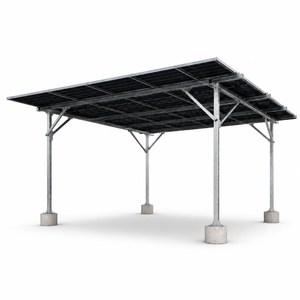
Battery Energy Storage System + home Solar Power Vehicle Housing Solar Panel Carport with Ev Charger

Battery Energy Storage System + Home Solar Power Vehicle Housing Solar Panel Carport with EV Charger

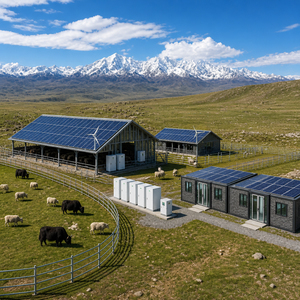
Integrated Agricultural Farm Solution Steel Structure Workshop Solar Energy Storage Guardrail Container House

Integrated Agricultural Farm Solution Steel Structure Workshop Solar Energy Storage Guardrail Container House

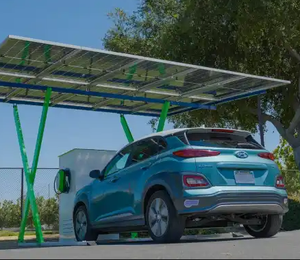
Solar PV Carport Structure Residential Commercial Solar Parking Shelter with Optional Energy Storage System

Solar PV Carport Structure Residential Commercial Solar Parking Shelter with Optional Energy Storage System

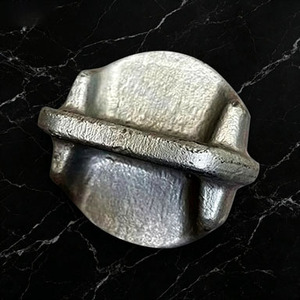
Powder Coated 45# Steel Square Container Lockable Stacking Cone Energy Storage Shelter Connection Cone

Powder Coated 45# Steel Square Container Lockable Stacking Cone Energy Storage Shelter Customizable Positioning Connection Cone

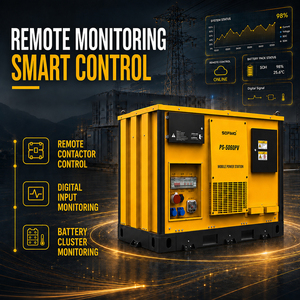
Factory Direct 380V Fuel Saving Hybrid Mobile Outdoor Energy Storage Shelter for Emergency Power Station Backup

Factory Direct 380V Fuel Saving Hybrid Mobile Outdoor Energy Storage Shelter for Emergency Power Station Backup

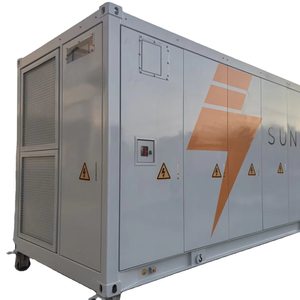
Multipurpose Modular Container Equipment Shelter with Weathering Steel Structure for Energy Storage Genset and Data Center

Multipurpose Modular Container Equipment Shelter with Weathering Steel Structure for Energy Storage Genset and Data Center

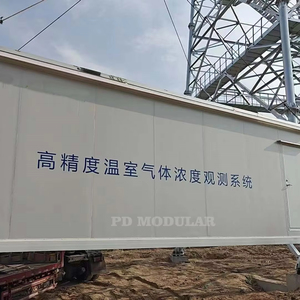
Portable Outdoor Monitoring Network Electrical Container Telecom Communication Power Energy Storage Shelter Cabinet

Portable Outdoor Monitoring Network Electrical Container Telecom Communication Signal Tower Power Energy Storage Shelter Cabinet

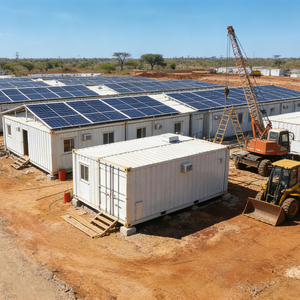
Rapid Deployment Turnkey Solar PV and Energy Storage Solution for Emergency Shelter Container Housing

Rapid Deployment Turnkey Solar PV and Energy Storage Solution for Emergency Shelter and Post-Disaster Temporary Container Housing

40,000 sq.ft.
Advanced Manufacturing Facility
Shindo 7
Seismic Seismic Rating Compliance
C5-M
Marine Anti-Corrosion Coating
30%–50%
Faster Deployment vs Site Construction
Strategic Market Insights

Energy Storage Shelter Market Trends & Grid Dynamics in Japan

An Executive Analysis of Japan’s Renewable Energy Transition, Grid Constraints, and the Evolving Requirements for Heavy-Duty Modular Enclosures.

The Acceleration of BESS Deployment under Japan's Green Transformation (GX) Vision

Japan’s commitment to achieving carbon neutrality by 2050 and reaching a 36–38% renewable energy share by 2030 has fundamentally reshaped the nation’s utility landscape. Under the Ministry of Economy, Trade and Industry (METI) Green Transformation (GX) blueprint, grid-scale Battery Energy Storage Systems (BESS) have transitioned from auxiliary assets to critical national infrastructure. However, deploying high-capacity lithium-ion battery banks across Japan presents unprecedented structural and environmental challenges.

Because Japan experiences frequent seismic events, severe typhoons, coastal salt-fog corrosion, and dense urban spatial limitations, standard off-the-shelf containers often fail to satisfy local building and safety regulatory benchmarks. Chinese manufacturers specializing in custom modular steel structures have stepped in to fill this technological gap, delivering prefabricated Energy Storage Shelters engineered specifically to meet Japanese Building Standard Law (Kenchiku Kijun-hō) and Fire Services Act (Shōbō-hō) guidelines.

Key Market Insight: Exporting Energy Storage Shelters to Japan requires an integrated design methodology that harmonizes structural steel integrity with thermal insulation (R-20+ rated), active HVAC liquid-cooling integration, and specialized C5-M marine-grade exterior coating to withstand coastal Japanese salt-spray environments.

Furthermore, volatility on the Japan Electric Power Exchange (JEPX) has fueled massive private sector investment in commercial and industrial (C&I) energy storage. Facilities across Tokyo, Osaka, and Nagoya are installing containerized solar-plus-storage solutions to execute peak-shaving, avoid exorbitant grid capacity surcharges, and maintain robust Business Continuity Planning (BCP) capabilities during natural emergency outages.

Field Application Matrix

Targeted Application Scenarios Across Japanese Prefectures

From Hokkaido’s heavy snowfall zones to Kyushu’s solar-saturated coastal grids, explore how custom energy storage shelters solve regional operational bottlenecks.

Post-Disaster BCP & Emergency Backup (Tohoku & Nankai Trough Zones)

Designed for immediate power stabilization during seismic disruptions. These modular shelters house high-density lithium iron phosphate (LFP) battery arrays alongside hybrid diesel generators, enabling hospitals, municipal centers, and telecom towers in disaster-prone coastal areas to maintain 72+ hours of autonomous operation.

Heavy-Snowfall & Low-Temperature Microgrids (Hokkaido & Niigata)

Equipped with reinforced structural roofs engineered to withstand snow loads exceeding 2.5 kN/m² (JIS C 8951 standard). Features insulated sandwich paneling with polyurethane cores and temperature-regulated HVAC climate control, protecting critical battery chemistries against sub-zero thermal degradation.

Commercial EV Carports & Fleet Charging Hubs (Tokyo & Osaka Megacities)

Integrated Solar PV Carport Shelters combined with Battery Energy Storage and ultra-fast DC EV chargers. These modular enclosures allow logistics operators and corporate headquarters to bypass local grid transformer upgrade costs by shaving peak EV charging loads during day hours.

Smart Agri-PV & Agricultural Cold Chain Storage (Kyushu & Nagano)

Modular equipment enclosures built for rural farming cooperatives. They couple rooftop solar, energy storage container units, and automated guardrail shelters to power refrigeration networks and automated agricultural equipment while providing grid frequency regulation services to regional power companies like Kyushu Electric (KEPCO).

E-E-A-T Technical Excellence

Why Leading Japanese EPCs Partner with Chinese Manufacturers

Combining world-class steel fabrication capacity with rigorous engineering compliance to deliver high-yield energy storage infrastructure.

Vertical Integration: From 40,000 sq. ft. Factory Floor to On-Site Deployment

Unlike traditional traders or local assemblers who outsource critical components, premier Chinese exporters operate fully integrated, 40,000 sq. ft. automated manufacturing facilities. Every energy storage shelter is built upon a heavy-gauge Corten steel chassis or structural steel framework engineered to absorb dynamic seismic vibrations up to Shindo 7 on the Japanese intensity scale.

By conducting design, architectural modeling, structural stress analysis, laser cutting, robotic welding, thermal insulation fitting, and pre-wiring under one roof, fabrication errors are mitigated prior to shipment. This offsite manufacturing workflow enables projects in Japan to be delivered 30% to 50% faster than site-built traditional concrete housing.

JIS & Fire Services Act Compliance

Pre-engineered structures incorporating heat-resistant isolation barriers, automatic aerosol/gas fire suppression channels, explosion vent relief hatches, and integrated liquid-cooling pipe passages compliant with rigorous Japanese regulatory safety guidelines.

Heavy Weathering Steel & C5-M Coating

Utilizing high-tensile 45# steel and SPA-H Weathering Corten steel finished with multi-layer epoxy zinc-rich primer and polyurethane topcoats, resisting salt corrosion in coastal zones like Yokohama, Kobe, and Fukuoka for 25+ years.

Turnkey Export & Logistics Efficiency

Structures are built with standardized ISO corner castings and lockable stacking cones, facilitating direct containerized ocean freight from Chinese major ports (Ningbo/Shanghai/Qingdao) directly to Japanese major commercial hubs with minimal port dwell time.

Decision Matrix

Engineering Comparison: Modular Shelters vs. Alternative Systems

A objective breakdown for EPC contractors, asset developers, and municipal planners selecting energy storage enclosures for Japanese projects.

Evaluation Criteria Factory-Built Chinese Modular Shelter Local Japanese Civil Concrete Build Standard ISO Shipping Container
Deployment Speed Fastest (Parallel factory fabrication & site prep) Slow (Subject to weather & local labor shortages) Moderate (Requires heavy interior retrofitting)
Seismic Isolation (Shindo 7) Engineered steel frame with dynamic load dampening High cost for reinforced foundation casting Rigid body; risk of weld fatigue under shear stress
Thermal & Climate Performance Factory R-20 insulation with liquid cooling integration Custom site insulation required Poor thermal barrier; prone to condensation
Japanese Code Compliance Pre-engineered to meet METI & Fire Services Act Full custom architectural approval needed Challenging due to structural steel modifications
Total Cost of Ownership (TCO) Lowest (30–40% cost reduction vs local civil) Highest (Driven by high Japanese labor rates) Moderate (High modification & retrofitting costs)
Procurement Guidance

Frequently Asked Questions by Japanese Procurement Teams

Direct answers to technical, regulatory, and logistical inquiries regarding Chinese energy storage shelter exports into Japan.

How do Chinese Energy Storage Shelters comply with Japan's Fire Services Act (Shōbō-hō)? +
Our specialized BESS shelters are engineered specifically around Japanese Fire Services Act regulations for energy storage installations containing over 17.5 kWh capacity. Structural designs incorporate fire-rated partition walls (El-120 rating), automatic gas/aerosol fire extinguishing system conduits, pressure release vents to prevent thermal runaway overpressure, and gas detector integration ports. Detailed structural blueprints and material fire certificates are provided to assist local Japanese EPCs in securing fire department permits.
What structural measures protect these shelters against Shindo 7 earthquakes in Japan? +
Every shelter utilizes heavy-duty structural steel profiles (JIS G3101 SS400 / Q355B structural steel) reinforced with cross-bracing and heavy Corten steel side walls. Floor structures are calculated for static load capacities exceeding 2,500 kg/m² to support dense battery racks. In addition, lockable container corner castings and customized positioning connection cones ensure structural integrity even under severe horizontal ground acceleration (PGA > 0.4g).
Can these shelters resist salt-fog corrosion along Japan's coastal regions? +
Yes. For projects located within 3 km of Japan's coastline (such as Tokyo Bay, Osaka Port, or coastal Kyushu), we apply a high-durability C5-M (ISO 12944) paint system. This includes abrasive sandblasting to Sa 2.5 standard, followed by an epoxy zinc-rich primer, an epoxy high-build intermediate coat, and a fluorocarbon/polyurethane topcoat with total dry film thickness (DFT) exceeding 240 microns.
How are shipping and sea transport handled from Chinese factories to Japanese ports? +
Our shelters are manufactured adhering strictly to ISO container standard dimensions (10ft, 20ft, 40ft High Cube) or modular steel frame units fitted with standard container corner lock points. They can be shipped as standard SOC (Shipper Owned Container) freight via major shipping lines directly from Ningbo, Shanghai, or Qingdao ports to Japanese ports like Yokohama, Tokyo, Nagoya, Kobe, and Hakata with average transit times of only 3 to 7 days.
What custom thermal insulation options are available for northern snow zones like Hokkaido? +
For cold climate installations, we offer 75mm to 150mm high-density Polyurethane (PUR) or Rockwool sandwich panels integrated inside the Corten outer wall. This achieves thermal transmittance values as low as 0.022 W/m·K. Coupled with intelligent HVAC heating loops and thermal bridge breaking structural frames, internal battery compartment temperatures remain within optimal operating limits (20°C to 25°C) even when ambient external temperatures drop to -25°C.
Is off-grid solar and generator integration pre-wired inside the shelter? +
Yes, our shelters can be delivered fully turnkey. Internal cable trays, main AC/DC distribution boards, ATS (Automatic Transfer Switch) enclosures, inverter rack mounts, auxiliary power systems, and remote monitoring network interfaces are factory pre-installed and routine-tested prior to dispatch.

Engineered Energy Storage Shelters Ready for Japanese Projects

Partner with China's premier manufacturer of custom BESS containers, solar carport shelters, and disaster-resilient equipment housing. Request our complete technical catalog and engineering drawings today.