
Explore our pre-engineered modular units and heavy-duty structural steel platforms crafted in our 40,000 sq. ft. Houston manufacturing facility.
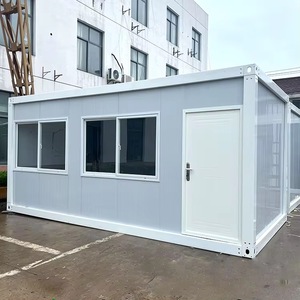
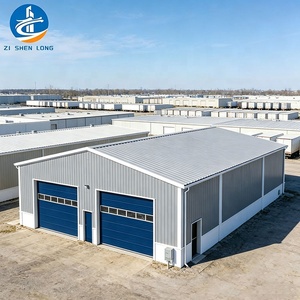
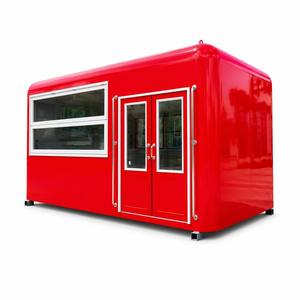
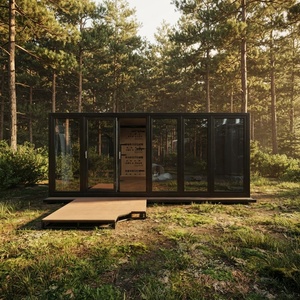
In modern industrial facilities, government installations, commercial logistics hubs, and high-threat infrastructure points, perimeter defense starts at the access threshold. Portable security cabins—frequently identified as guard shacks, gatehouses, access control pods, or security booths—have evolved from crude wooden shelters into sophisticated, high-performance structural engineered modules.
Today’s top-tier manufacturers utilize heavy-gauge structural steel chassis, advanced climate-control HVAC systems, integrated biometric entry hardware, and ballistic-rated glazing. The primary driver behind this manufacturing shift is the demand for rapid deployment, cost predictability, structural longevity, and thermal efficiency. By moving 90% to 95% of the construction workflow into a controlled factory environment, commercial clients eliminate weather risks, minimize site disruption, and guarantee strict building code compliance across international jurisdictions.
Information Gain Insight: Unlike standard modular offices, industrial security cabins require targeted blast-load mitigation, thermal break structural engineering, and customized structural frames capable of supporting heavy overhead equipment such as PTZ surveillance masts, radar systems, and automated barrier arm counterweights.
Concurrent manufacturing and foundation site work shrink overall project schedules by up to 50% compared to traditional masonry builds.
Fabricated using heavy Q235B/Q355B structural steel chassis, delivering wind load resistance exceeding 150 mph (240 km/h) for hurricane-prone zones.
Factory fabrication locks in material and labor costs early, preventing the budgetary blowouts typical of multi-trade site construction.
Selecting the ideal portable security cabin requires matching physical site conditions with targeted operational threat profiles. The table below outlines key technical specifications across standard commercial, high-durability industrial, and extreme-threat security cabins manufactured by enterprise leader ROXBOX Containers and partners.
| Specification Category | Standard Commercial Cabins | Heavy Industrial & Coastal Pods | High-Threat Ballistic / Off-Grid Units |
|---|---|---|---|
| Primary Frame Structure | Light-gauge cold-formed steel framing | Heavy-duty Q355B structural steel tube & ISO corner blocks | Reinforced hot-rolled structural steel chassis with armor plating |
| Wall Insulation & Fire Rating | 50mm Expanded Polystyrene (EPS) Panel | 75mm High-Density Rockwool (Class A Fire Rated, R-21) | 100mm Polyurethane (PU) Injected Core (R-28 Thermal Value) |
| Glazing & Windows | Double-pane tempered glass sliding windows | Impact-resistant laminated safety glass with low-E coating | UL 752 Level 3 to Level 8 Ballistic-Resistant Glazing |
| HVAC & Microclimate | 12,000 BTU Wall-mount mini-split AC/Heat | Integrated HVAC with marine-grade anti-corrosion coating | Explosion-proof HVAC unit + positive pressure air filtration |
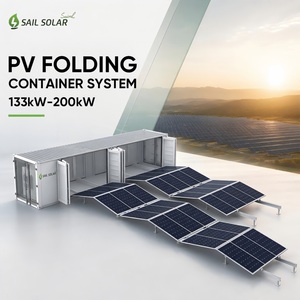
| Power & Autonomy | Grid tie-in via external quick-connect junction | Dual-circuit grid tie-in with backup generator auto-transfer | Helios Solar PV Array (200KW option) + BESS Lithium Storage |
| Expected Lifespan | 15–20 Years | 25–35 Years | 40+ Years (Maint-free powder coating) |
When procurement teams evaluated options for high-stakes installations—ranging from ski resorts in Aspen Snowmass to Caribbean beach clubs in Exuma, Bahamas, and corporate headquarters for global brands like Nike and Coca-Cola—the choice came down to engineering accountability and control.
ROXBOX operates a 40,000 sq. ft. advanced manufacturing plant in Houston, Texas, supported by an architect-led design studio in Denver, Colorado. As an employee-owned firm, every team member retains direct accountability for product quality, structural integrity, and timeline delivery.
We eliminate vendor finger-pointing by handling concept design, structural engineering, code permitting, factory production, and final placement under one roof.
By pairing security cabins with Helios Solar PV modules and Battery Energy Storage Systems (BESS), our cabins operate seamlessly on remote islands and off-grid facilities.
Engineering built for extreme challenges: high snow-load mountain peaks, highly corrosive ocean air environments, and remote island logistics transport.
As enterprise security strategies shift toward decentralized operations and digital perimeter control, procurement directors must account for emerging technology trends during cabin selection:
Modern security booths are no longer mere visual guard posts. They function as processing centers equipped with automated license plate recognition (ALPR), biometric facial recognition scanners, automated driver check-in kiosks, and remote monitoring consoles. Prefabricating these cable runs, server racks, and fiber-optic conduits inside the factory reduces on-site integration costs by up to 60%.
With volatile energy grids and extreme weather events worldwide, security checkpoints must remain fully operational during grid failure. Integrating micro solar arrays directly into rooftop parapets paired with industrial-grade lithium battery banks ensures uninterrupted power for CCTV networks, gate barriers, and interior climate control systems.
Industrial projects, mining sites, and event infrastructure often relocate after 2 to 5 years. Modern steel frame security cabins are engineered with integrated ISO twist-locks and reinforced top-crane lifting lugs, allowing complete facilities to be unbolted, loaded onto flatbed trailers, and redeployed elsewhere with zero structural degradation.
Below are technical answers to common questions faced by construction managers, municipal engineers, and security procurement officers.
Connect directly with our engineering and design experts to review site layout drawings, request custom ballistic specifications, or secure factory pricing quotes.