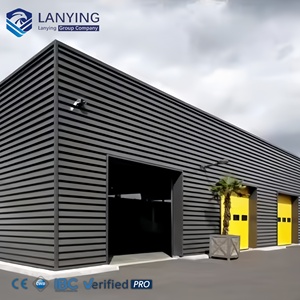
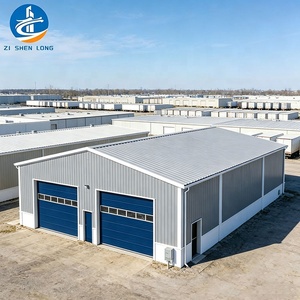
Prefabricated Steel Structure Logistics Warehouse Workshop Industrial Building Commercial Building Steel Structure Warehouse
Contact Us

Explore our engineering portfolio ranging from high-containment mobile labs to commercial steel frame workshops and prefabricated cleanrooms.
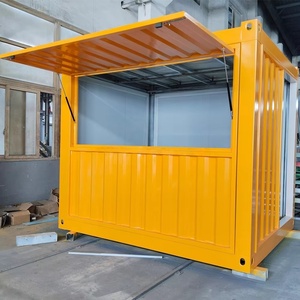
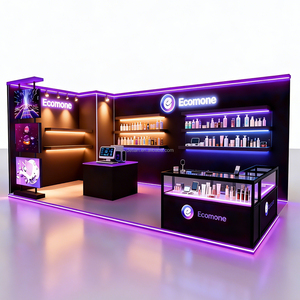
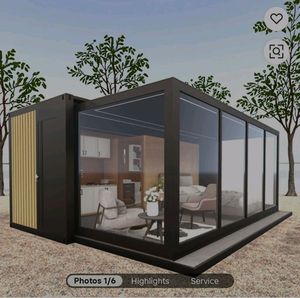
The global scientific research, pharmaceutical manufacturing, and clinical diagnostic sectors are undergoing a structural paradigm shift. Traditional brick-and-mortar laboratory construction—historically plagued by extended commissioning timelines, weather disruptions, cost overruns, and severe site-level contamination risks—is rapidly giving way to factory-engineered modular laboratory units. As a leading manufacturer and global exporter, our facility leverages advanced offsite construction methodologies to deliver turnkey, highly compliant biosafety and chemistry testing environments to international buyers.
Modern modular laboratory architecture represents far more than temporary relief space; it is a permanent, high-performance solution engineered to strict ISO 14644 cleanroom standards, cGMP guidelines, and BSL-1 through BSL-3 containment protocols. By executing structural welding, mechanical HVAC ducting, electrical conduit integration, and HEPA filter sealing within our controlled 40,000 sq. ft. manufacturing hub in Houston, Texas, we eliminate over 80% of onsite labor bottlenecks while guaranteeing absolute structural and biological compliance.
Information Gain Insight: Parallel workflow scheduling allows site foundation prep and utility trenching to take place simultaneously with factory fabrication. This concurrent engineering model reduces total project delivery cycles by 30% to 50%, enabling bio-tech operators and industrial firms to monetize research cycles months ahead of traditional schedules.
B2B procurement teams, architectural engineering leads, and EPC contractors searching for "modular lab container supplier", "prefabricated cleanroom factory", or "mobile BSL-2 lab exporter" share distinct search intents. They demand verifiable technical specifications, clear regulatory compliance metrics, transparent manufacturing capability disclosures, and flexible architectural scalability. To address this user intent, modular laboratory systems are categorized into two core structural systems: ISO Containerized Mobile Labs and Structural Steel Frame Custom Modular Complexes.
Built within heavy-gauge Corten steel 20ft and 40ft High Cube containers. Ideal for remote mining sites, agricultural testing, field epidemic control, and quick intermodal logistics via sea or freight rail.
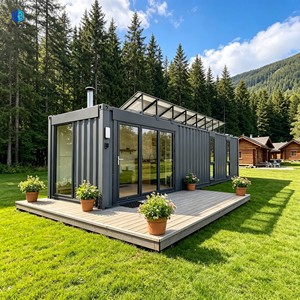
Custom-engineered structural steel chassis sized up to 14ft in width and multi-story configurations. Offers wide spans, open floor plans, integrated air showers, and customizable ceiling heights.
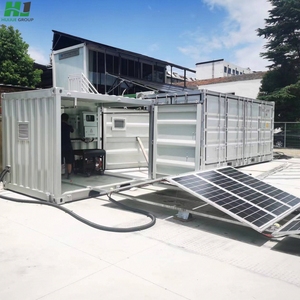
Equipped with integrated solar arrays and Battery Energy Storage Systems (BESS) for autonomous operation in off-grid disaster zones, remote islands, and unserviced industrial sectors.
Precision execution is mandatory when housing sensitive diagnostic instrumentation, mass spectrometers, automated PCR equipment, or hazardous chemical reagents. Our modular laboratory units are built with non-porous, chemical-resistant interior envelopes designed to withstand aggressive sterilization protocols including vaporized hydrogen peroxide (VHP) and chlorine dioxide decontamination.
| Evaluation Parameter | Structural Steel Modular Lab | ISO Shipping Container Lab | Traditional Site-Built Lab |
|---|---|---|---|
| Deployment Timeline | 8 - 12 Weeks (30-50% faster) | 4 - 8 Weeks (Rapid deployment) | 9 - 18 Months (Weather dependent) |
| Cleanroom Rating | ISO Class 5 to Class 8 / cGMP | ISO Class 7 to Class 8 / BSL-2 | Custom site-built ISO classes |
| HVAC Pressurization | Integrated Positive/Negative (+/- 50Pa) | Single-zone Negative/Positive | Complex site-installed ducting |
| Floor Construction | Seamless Epoxy / Anti-Static Vinyl | Chemical-resistant PVC / Epoxy | Site-poured concrete + coating |
| Relocation Capability | Fully Craneable & Transportable | Intermodal Ready (Standard Freight) | Fixed / Non-relocatable |
| Off-Grid Compatibility | Solar PV + Hybrid BESS Option | Direct Solar Generator Hookup | Grid Dependent / External Genset |
The core of any scientific laboratory unit lies in its environmental control system. Our factory integrates dedicated dedicated air handling units (AHU) capable of delivering 30 to 60 air changes per hour (ACH). Depending on client requirements, we implement dual-stage filtration featuring MERV 14 pre-filters coupled with terminal gel-seal HEPA (99.97% efficiency @ 0.3 µm) or ULPA (99.999% efficiency @ 0.12 µm) filters. Differential pressure sensors dynamically adjust supply and exhaust blower speeds to maintain negative pressure cascades for biosafety isolation or positive pressure zones for sterile product compounding.
As international supply chains evolve and climate risks intensify, global procurement directors are re-evaluating capital expenditure (CapEx) models for laboratory assets. We highlight three macro trends shaping the procurement of modular laboratories through 2030:
Next-generation modular units leave our factory embedded with IoT-enabled Building Management System (BMS) architectures. Real-time sensors track differential pressure, humidity, temperature, toxic gas accumulation, and filter particulate loading. Facility managers can remotely monitor lab integrity across multiple global sites through a centralized cloud dashboard, ensuring continuous compliance with FDA 21 CFR Part 11 and EU Annex 11 standards.
From hurricane-prone island locations in the Caribbean to remote mining concessions in West Africa, access to grid electricity is often unstable. By incorporating high-efficiency solar modules and lithium-iron-phosphate (LiFePO4) Battery Energy Storage Systems (BESS), modern modular laboratories operate independently of local utility grids. These off-grid units guarantee uninterrupted power supply (UPS) to critical ultra-low temperature (ULT) freezers, bio-reactors, and analytical incubators.
Offsite modular fabrication drastically lowers environmental impact compared to conventional construction. Our manufacturing process minimizes material scrap by over 90% through BIM-guided precision steel cutting. Furthermore, structural steel frames are 100% recyclable, assisting multi-national pharmaceutical corporations in achieving Scope 3 carbon reduction mandates.
Trust in modular laboratory manufacturing is founded on verifiable engineering capability, rigorous quality control, and an established track record. Operating out of our 40,000 sq. ft. manufacturing facility in Houston, Texas, backed by our specialized architectural studio in Denver, Colorado, our employee-owned firm brings complete single-source accountability to every project.
Licensed architects, MEP engineers, structural engineers, and master welders collaborate under one factory roof—eliminating vendor disputes and design hand-off errors.
Every laboratory unit undergoes strict Factory Acceptance Testing including envelope pressure decay testing, HVAC airflow balancing, electrical load testing, and cleanroom particle count validation prior to export shipping.
We manage complex logistics from factory floor to global destination—offering crane installation support, utility hookup supervision, and complete operational commissioning anywhere in North America, the Caribbean, and international markets.
Our engineered modular units are trusted by global industry leaders, municipal authorities, and institutional organizations including Nike, Live Nation, Coca-Cola, Aspen Snowmass, Alterra Mountain Company, Arizona State University, Nokian Tyres, and the Denver Zoo. Whether delivering high-altitude mountain research cabins or solar-powered island medical hubs, our structures deliver uncompromised reliability.
Key technical and logistical questions answered for procurement managers, facility engineers, and lab managers evaluating modular laboratory units.
Connect directly with our engineering and technical sales specialists to review floor plans, request custom CAD engineering, or obtain factory price quotations.
Request Technical Consultation