
Factory-direct OEM/ODM solutions built with ISO Corten structural steel, integrated MEP systems, and severe-weather climate ratings.
An authoritative technical guide for global procurement officers, commercial developers, and engineering firms sourcing prefabricated swimming pools from China.
Prefabricated container swimming pools must withstand massive lateral hydrostatic pressures while resisting extreme marine and atmospheric corrosion environments. Premier Chinese exporters utilize ISO 1161 standardized Corten-B (SPA-H) structural atmospheric corrosion-resistant steel. Unlike conventional structural carbon steel, Corten-B develops a dense protective rust-like oxide layer (patina) when subjected to alternating wet and dry cycles, radically reducing internal rust propagation.
From an engineering perspective, the structural frame of a 20ft or 40ft container pool requires reinforced corner posts, heavy-duty bottom side rails, and modified cross-members capable of carrying dynamic fluid loads ranging from 15,000 to 45,000 liters. The hydrostatic pressure calculation adheres to P = ρgh, where fluid densities require internal wall gusseting and longitudinal rib reinforcements to prevent structural deflection exceeding 1/300th of the span length under maximum capacity.
The interior membrane configuration dictates both the operational lifespan and maintenance overhead of exported container swimming pools. B2B buyers must evaluate three primary interior shell methodologies:
Energy efficiency is a major baseline requirement for international buyers in North America, Europe, and Australia. Export-grade container pools are manufactured with closed-cell polyurethane (PU) foam insulation injected under high pressure directly between the Corten steel corrugated skin and the inner shell matrix.
With a thermal conductivity index (λ) as low as 0.022 W/(m·K), a 50mm to 100mm layer of closed-cell spray insulation achieves an R-value between R-14 and R-28. This thermal barrier prevents heat dissipation into the surrounding subgrade or ambient air, cutting heat pump power usage by up to 45% during winter operation.
Our single-source engineering control merges structural steel fabrication, electrical code compliance (UL/CE/SAA), and hydraulic piping design under one manufacturing roof. Eliminates multi-vendor disputes and guarantees exact fitment upon delivery.
Operating out of modern, climate-controlled facilities equipped with automated fiber laser cutters, robotic welding cells, and industrial blast rooms to ensure flawless surface preparation prior to epoxy marine painting.
100% of our export container swimming pools undergo a continuous 72-hour hydrostatic static pressure test and electrical insulation safety inspection prior to packaging, eliminating field failure rates.
A quantitative procurement analysis detailing total cost of ownership, installation velocity, and structural resilience.
| Performance & Logistics Criteria | Prefabricated Corten Container Pool | In-Situ Cast Concrete Pool | Standard Fiberglass Shell |
|---|---|---|---|
| Manufacturing & On-Site Delivery Time | 2 to 4 Weeks (Factory Offsite) | 3 to 6 Months (Weather Dependent) | 6 to 10 Weeks |
| Structural Lifespan & Resilience | 25+ Years (Corten Steel + Marine Epoxy) | 50+ Years (Requires Structural Re-plastering) | 15 to 20 Years (Osmosis Risk) |
| Site Footprint & Civil Work Required | Minimal (Simple Concrete Pad / Pier Footings) | Extensive Excavation & Steel Rebar Framework | Full Excavation & Backfill Engineering |
| Relocation Capability | 100% Portable (Standard Intermodal Transport) | 0% (Permanent Fixed Civil Asset) | Non-Relocatable |
| Integrated Thermal Insulation | Factory Injected PU Foam (R-14 to R-28) | Uninsulated (High Thermal Loss) | Optional Rigid Board (Low Efficiency) |
| Plugin Equipment Enclosure | Built-in Hidden Pump & Filtration Room | Separate Civil Construction Required | External Vault Required |
As commercial hospitality operators, eco-resort developers, and residential builders seek scalable, low-carbon building alternatives, the global export market for container pools is undergoing rapid technological convergence. Understanding these key macro trends empowers procurement managers to future-proof their capital investments:
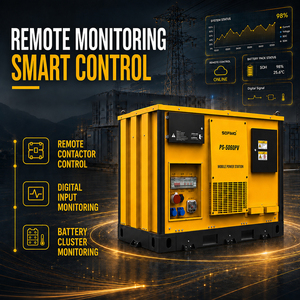
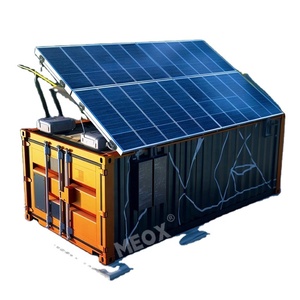
Modern container pools are no longer simple static water vessels; they are transforming into micro energy ecosystems. Leading Chinese exporters are now building hybrid pools integrated with dedicated battery container units and high-efficiency inverter heat pumps. Utilizing microgrid controllers, solar thermal collectors heat water during off-peak sunshine hours, while lithium-ion storage units maintain water temperature and circulation overnight, eliminating grid dependencies in remote island locations.
To maximize usability within compact 20ft and 40ft footprints, international buyers are prioritizing high-velocity counter-current swim turbine systems. Capable of moving up to 1,200 cubic meters of water per hour with adjustable laminar flow currents, these systems turn compact luxury pools into full-distance training facilities for athletic clubs and high-end residential estates.
Smart container pools exported from top Chinese facilities feature integrated IoT control panels compatible with commercial building management systems (BMS). Remote monitoring enables real-time tracking of pH balance, ORP (Oxidation-Reduction Potential), free chlorine levels, turbidity, and pump pressure. Automated salt-water chlorination paired with secondary UV-C and Ozone oxidation loops reduces chemical handling overhead by 80% while ensuring pristine water quality for hospitality guests.
Shipping large-scale structural water vessels across international ocean routes demands strict compliance with international maritime logistics frameworks:
Connect with our structural engineering team to receive full CAD specs, structural FEA analysis reports, factory pricing, and global freight scheduling.
Get Catalog