0%

Choosing among China’s top Modular Cannabis Dispensaries suppliers requires more than comparing catalog prices. It requires careful attention to compliance, construction quality, and documented experience. A reliable supplier should understand modular architecture, controlled retail environments, fire safety, accessibility, electrical systems, and local building codes. The best partner can also explain how its designs adapt to licensed markets and lawful product regulations.

China offers manufacturers with different strengths. Some specialize in steel frames and insulated panels. Others provide complete interiors, lighting, counters, security doors, and climate-control systems. A well-designed unit may include a compact reception area, durable flooring, discreet product displays, and clear customer circulation. These details affect daily operations. They also influence maintenance costs and staff safety.

Independent verification matters. Ask for factory records, material specifications, project photographs, inspection reports, and references from comparable commercial facilities. Certifications can support credibility, but they should not replace direct evaluation. A video tour is useful, although it cannot reveal every production weakness. In-person inspection remains better when practical.

No supplier is perfect. Some attractive proposals may hide transport limits, installation exclusions, or unclear warranty terms. That uncertainty deserves attention. Buyers should confirm shipping dimensions, site preparation, electrical standards, after-sales support, and compliance responsibilities in writing. This guide examines how to evaluate China-based suppliers with a practical, evidence-led approach. It focuses on lawful, professionally operated facilities rather than product sales. The goal is simple: identify modular solutions that are safe, adaptable, transparent, and suitable for approved local use.
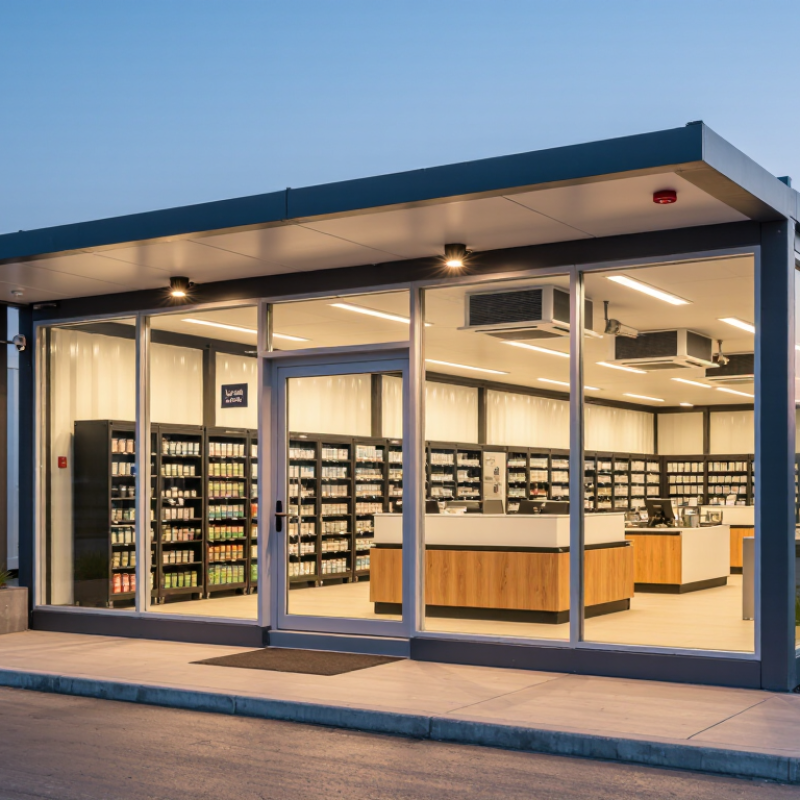
China Top Modular Cannabis Dispensaries Suppliers?

What Are Modular Cannabis Dispensaries?

A modular cannabis dispensary is a prefabricated retail space designed for regulated cannabis sales where local law permits them. Instead of constructing every wall on site, manufacturers build sections in a controlled facility. These sections may include sales counters, secure storage, staff areas, washrooms, and electrical systems. The modules are then transported and assembled at the approved location.

A reliable design must support compliance, safety, and daily workflow. Entry control, customer privacy, camera placement, fire protection, ventilation, and accessibility require careful planning. Materials should resist moisture and heavy foot traffic. Good lighting also helps staff inspect products and maintain a calm shopping environment. From practical project experience, small layout decisions matter. A poorly placed counter can slow service. An attractive design can still fail if maintenance access is ignored.

Tips: Confirm zoning and licensing requirements before ordering modules. Ask for structural drawings, electrical plans, installation records, and material specifications. Review delivery routes early, especially when roads are narrow or urban access is limited. Test the customer flow with staff before opening. Keep storage secure and clearly separated from public areas. Modular buildings can reduce construction time, but they are not automatically cheaper or better. Local permits, transportation, foundations, and future repairs may change the budget. A careful supplier should explain these limitations openly, not promise a perfect solution.

Key Features of China’s Modular Dispensary Suppliers

China’s modular dispensary suppliers increasingly serve licensed, regulated retail projects. Their main advantage is factory-based customization. Buyers can request compact kiosks, private consultation rooms, storage counters, and branded interior panels.

Strong suppliers use steel frames, fire-rated boards, tempered glass, and moisture-resistant flooring. These materials matter in busy retail spaces. A well-planned unit should allow clean cable routing and easy access for maintenance. Adjustable shelving helps staff display approved wellness products without wasting wall space. Some factories also provide lighting plans, ventilation options, reception desks, and flat-pack shipping systems.

Quality control should include weld inspections, surface checks, electrical testing, and trial assembly before shipment. Ask for material certificates, production photographs, packing records, and installation drawings. Clear documentation shows practical experience, not just attractive computer images. Suppliers familiar with export projects may also understand container loading, local building rules, and fire-safety requirements.

Not every supplier gets this right. A low quotation may exclude installation, revised drawings, or replacement parts. I would request a sample corner before approving a full unit. Check door alignment, drawer movement, paint consistency, and odor from interior materials. Small defects become expensive after overseas delivery. Compliance remains the buyer’s responsibility, so local permits and product regulations need independent review.

China Top Modular Cannabis Dispensaries Suppliers? - Key Features of China’s Modular Dispensary Suppliers

Evaluation Dimension Common Supplier Capability Typical Specification or Range Buyer Verification Point Importance for a Dispensary
Modular Construction Factory-built wall, ceiling, counter, and display modules that can be assembled on site. Panelized or container-based layouts; module dimensions are customized to the project. Request structural drawings, assembly instructions, and replacement-panel availability. Supports faster installation, relocation, and future store expansion.
Main Structural Materials Steel or aluminum framing combined with engineered boards, glass, laminates, or decorative panels. Material selection varies according to fire rating, moisture exposure, weight, and interior finish requirements. Check material declarations, corrosion protection, load ratings, and indoor-air-quality documentation. Affects durability, safety, appearance, and long-term maintenance cost.
Retail Layout Flexibility Configurable reception areas, product displays, consultation rooms, storage zones, and staff circulation. Layouts can be adapted to small kiosks, standalone stores, or larger retail interiors. Confirm 2D plans, 3D renderings, accessibility clearances, and customer-flow assumptions. Improves customer flow, staff efficiency, privacy, and merchandising capacity.
Electrical Compatibility Pre-installed wiring pathways, lighting infrastructure, outlets, and service-access panels. Electrical design must be adapted to the destination country’s voltage, frequency, plug, and inspection requirements. Use a locally licensed electrician to review circuit loading, grounding, emergency lighting, and permits. Reduces installation risk and helps integrate lighting, security, POS, and display equipment.
Fire and Building Compliance Suppliers may provide material test reports and construction documentation for review by local authorities. Compliance depends on the installation country, building type, occupancy, and local fire code. Do not rely only on factory certificates; obtain approval from the destination jurisdiction. Essential for legal operation, insurance coverage, and occupant safety.
Security Integration Provision for cameras, controlled access, shutters, reinforced storage, alarms, and secure service areas. Security hardware and monitoring systems are generally specified separately from the modular shell. Verify cable routes, mounting strength, access-control interfaces, and local security requirements. Supports inventory protection, employee safety, and regulatory obligations.
Climate and Ventilation Planning Modular interiors can include ventilation openings, insulated panels, lighting layouts, and equipment zones. HVAC capacity must be calculated for local climate, occupancy, lighting load, and building conditions. Request heat-load assumptions and coordinate final HVAC design with a local engineer. Maintains comfort and protects products, finishes, electronics, and staff working conditions.
Customization Level Customization may include dimensions, finishes, counters, shelving, signage zones, lighting, and partitioning. Higher customization generally increases engineering work, sampling, and production time. Approve shop drawings, finish samples, hardware schedules, and a signed specification before production. Allows the store to meet local branding, accessibility, operational, and landlord requirements.
Manufacturing and Quality Control Export-oriented factories commonly use production drawings, sample approvals, inspections, and packaging procedures. Quality depends on documented tolerances, inspection checkpoints, and control of outsourced components. Use pre-shipment inspection, photographic records, packing lists, and a written defect-remedy process. Reduces damage, dimensional errors, missing parts, and installation delays.
Shipping and Site Installation Suppliers may provide export packing, container loading plans, assembly guides, and remote installation support. Freight, customs clearance, unloading equipment, local labor, and site preparation are usually project-specific. Clarify delivery terms, packaging dimensions, lifting requirements, installation scope, and spare-part policy. Determines the actual landed cost and project schedule.
Regulatory and Legal Review A modular supplier can manufacture the structure, but cannot replace local licensing, planning, fire, accessibility, or cannabis-law advisors. Cannabis retail rules differ by country, state, province, municipality, and product category. Confirm zoning, retail licensing, security rules, labeling requirements, and permitted product activities before ordering. Prevents a compliant-looking structure from being unusable at the intended location.

Note: Specifications are general procurement benchmarks for export-oriented modular retail construction. Final dimensions, certifications, electrical systems, fire ratings, and cannabis-retail permissions must be verified for the destination jurisdiction and project site.

How to Evaluate Modular Cannabis Dispensary Manufacturers

How to Evaluate Modular Cannabis Dispensary Manufacturers

Choosing a modular cannabis dispensary manufacturer requires more than comparing factory prices. Start with documented experience in regulated retail construction. Ask for completed project photos, inspection records, and client references. The supplier should understand local building codes, accessibility rules, fire protection, ventilation, and electrical loads. These details affect approval and opening time. They are not decorative extras.

McKinsey’s modular construction research indicates that standardized building methods can reduce schedules by 20% to 50%, although results vary by project. Treat that range carefully. A factory may promise speed, yet poor site preparation can erase the advantage. Request a realistic production schedule, factory quality-control checklist, and delivery plan. For China-based suppliers, verify material certificates, export documentation, packaging standards, and independent inspections before shipment. One overlooked connector can become an expensive delay.

Security and customer flow also deserve practical testing. Review camera layouts, controlled access points, storage zones, lighting, and staff sightlines. MJBizDaily’s 2024 Factbook projected U.S. regulated cannabis sales above 31 billion dollars, showing why reliable retail infrastructure matters. However, market growth does not prove a manufacturer’s competence. Compare warranty terms, replacement-part availability, moisture resistance, insulation performance, and lifecycle costs. A sample room or pilot unit helps reveal weak seals, uneven flooring, and awkward service routes. I would still allow room for revision; first designs are rarely perfect.

Regulatory and Quality Considerations for Global Buyers

Regulatory and Quality Considerations for Global Buyers

Choosing modular cannabis dispensary suppliers requires more than comparing price per square meter. Grand View Research estimated the global legal cannabis market at USD 57.18 billion in 2023. Growth attracts capable manufacturers, but also uneven documentation. Buyers should verify local licensing, zoning, fire protection, accessibility, electrical certification, and import rules before approving a design. Requirements differ sharply between jurisdictions.

Grand View Research estimated the global legal cannabis market at USD 57.18 billion in 2023.

Quality begins with traceable materials and controlled installation. Ask for factory inspection records, structural calculations, wiring certificates, and fire-resistance test results. ISO 9001-based quality systems can improve consistency, but certification alone proves little. Check the certification scope and expiry date. For product-handling areas, documented cleaning surfaces, secure storage, ventilation, and temperature monitoring matter. The 2024 Global Cannabis Report by Prohibition Partners also highlights regulatory fragmentation across international markets, making one universal layout unrealistic.

Security should be designed into the module, not added after delivery. Use controlled entrances, reinforced doors, alarm integration, camera coverage, and protected customer data. A practical supplier should provide a commissioning checklist, spare-part plan, and local maintenance contacts.

A cheaper unit may hide weak insulation or unsuitable wiring. That is not always obvious. I would also request a full-scale factory walkthrough, because polished renderings can conceal awkward staff circulation and poor emergency access. Final approval should come from qualified local architects, engineers, and regulators.

Comparing Customization, Costs, and Delivery Capabilities

Choosing a modular cannabis dispensary supplier in China requires more than comparing catalog photos. In licensed markets, the supplier must understand local building, fire, accessibility, electrical, and security requirements. Experienced teams can adapt wall panels, service counters, lighting, ventilation, and storage zones to the site. A good design feels practical, not merely attractive. Ask for material samples, factory inspection records, and drawings with exact dimensions. Small details matter, such as a reinforced counter edge or a washable floor joint.

Customization usually raises the price. However, standard modules can shorten production and reduce design fees. Costs also depend on insulation, glazing, fire-rated materials, internal wiring, furnishings, packaging, and installation support. A low quotation may exclude taxes, port handling, foundation work, or local permits. That gap can become expensive. My early estimates often focused too heavily on the unit price. The better method is comparing the complete delivered cost.

Delivery capability deserves equal attention. Confirm production lead time, container loading plans, export documents, and damage-control procedures. Suppliers should provide numbered packing lists, installation drawings, and replacement plans for damaged parts. A strong supplier can coordinate with local contractors across time zones. Still, remote installation is not flawless. Weather, port congestion, and site measurements can create delays. Request a realistic schedule with buffer days, not a perfect promise. A trial module or digital walkthrough can expose design problems before the shipment leaves the factory.

China Modular Cannabis Dispensary Suppliers: Customization, Cost, and Delivery Comparison

This benchmark uses anonymized supplier categories rather than company or brand data. Scores are normalized to a 0–100 scale: higher customization and delivery scores indicate stronger capabilities, while a higher cost index represents a higher relative project cost. Delivery capability considers manufacturing readiness, export coordination, and typical lead-time reliability.

FAQS

What can modular dispensary suppliers customize?

They can build compact kiosks, consultation rooms, storage counters, and interior display panels. Small spaces matter.

Which materials are suitable for a modular retail unit?

Steel frames, fire-rated boards, tempered glass, and moisture-resistant flooring are practical choices. They support daily retail use.

What should buyers inspect before accepting a unit?

Check door alignment, drawer movement, paint consistency, cable routing, and interior odors. Small defects become expensive overseas.

What quality documents should a supplier provide?

Request material certificates, weld inspection records, electrical tests, production photos, and packing records. Computer images are not enough.

Why is a sample corner useful before full production?

It reveals weak finishes, awkward joints, poor storage access, and unsuitable materials before shipment. I would request one.

What design services may a modular supplier offer?

Some suppliers provide lighting plans, ventilation options, reception desks, shelving, and installation drawings. The scope must be written clearly.

What regulations must global buyers review?

Buyers should independently check zoning, permits, fire safety, accessibility, electrical rules, and import requirements. Rules differ by location.

How should security be included in the design?

Use controlled entrances, reinforced doors, alarm connections, camera coverage, and protected customer-data systems. Security should not be an afterthought.

What installation and maintenance support should buyers expect?

Ask for commissioning checklists, spare parts, maintenance contacts, and clear replacement procedures. Cheap units may hide future costs.

How can buyers judge whether a supplier is genuinely capable?

Request a factory walkthrough, trial assembly, structural calculations, and full-scale circulation checks. Renderings can conceal awkward staff movement.

Conclusion

Modular Cannabis Dispensaries are prefabricated, adaptable retail spaces designed to support compliant, efficient, and professional operations in jurisdictions where regulated cannabis sales are legally permitted. China’s modular dispensary suppliers typically focus on streamlined construction, flexible layouts, durable materials, lighting, security infrastructure, climate control, and efficient installation. Their modular approach can help buyers reduce construction time while maintaining consistent quality and allowing future expansion.

When evaluating manufacturers, global buyers should review production experience, engineering capabilities, material certifications, quality-control procedures, customization options, communication standards, and after-sales support. Regulatory compliance is essential, including fire safety, accessibility, electrical standards, data protection, and local licensing requirements. Buyers should also compare total costs rather than focusing only on the initial quotation, considering transportation, installation, taxes, maintenance, and delivery schedules. A reliable supplier should provide transparent documentation, realistic timelines, and solutions tailored to the buyer’s location, operational needs, and applicable laws.

Olivia

Olivia

Olivia is a professional marketing specialist with a strong understanding of the company’s products, their practical applications, and the needs of the customers they serve. She regularly contributes expert articles to the company website, sharing clear, useful information that helps readers......