Sourcing Modular Healthcare Facilities globally is not simply a purchasing exercise. It is a coordinated search for safe, adaptable, and clinically suitable spaces. Buyers must compare manufacturers, certifications, transport routes, installation teams, and after-sales support. A factory may promise rapid production, yet poor site access can delay opening by weeks. Small details matter, including ceiling heights, medical gas routing, infection-control surfaces, and backup power connections.
Roger Krulak, founder of FullStack Modular, has described the modern approach clearly: “Modular construction is not a shortcut; it is a different way to build.” His observation applies strongly to healthcare projects. Standardized modules can support faster delivery, but they still require careful clinical planning. A consultation room cannot be treated like an ordinary office. Nurses need efficient circulation. Patients need privacy. Technicians need reliable access for maintenance.
Global sourcing also demands practical judgment. Local climate, workforce capability, customs procedures, and healthcare standards can change the project’s risk profile. A supplier with excellent factory output may lack regional installation experience. That weakness should not be ignored. Buyers should request factory audits, sample specifications, quality records, and references from comparable facilities. They should also test communication before signing a contract.
The strongest sourcing strategy balances speed with evidence. It accepts that modular delivery is efficient, but never automatic. Some assumptions will fail. That is normal, and useful, if teams review them early. This guide explains how to assess suppliers, control quality, manage logistics, and select Modular Healthcare Facilities that serve patients reliably over time.
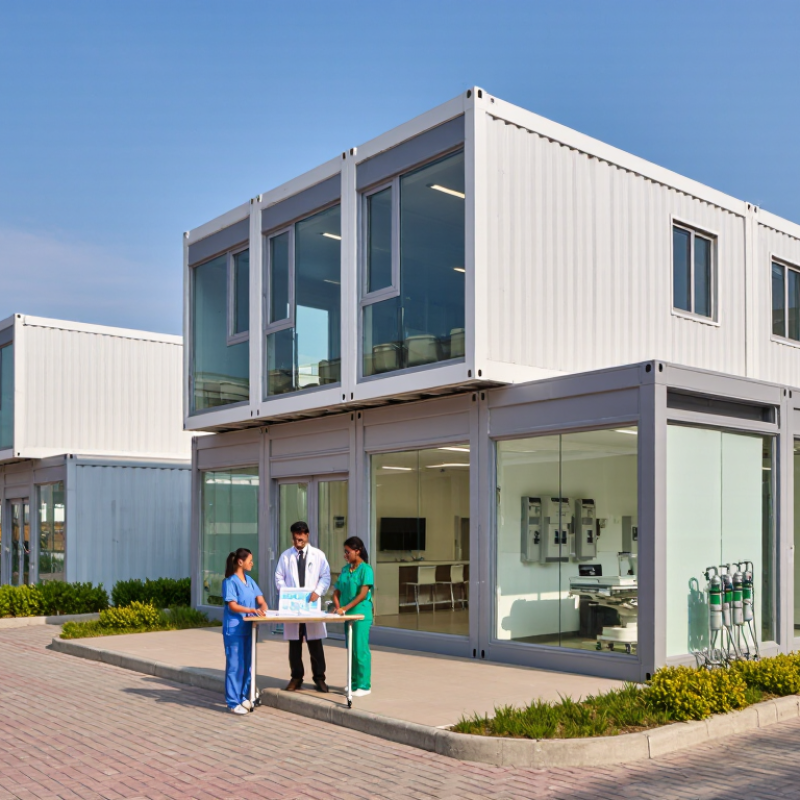
Modular healthcare facilities are clinical spaces manufactured in controlled factory settings, then transported and assembled on prepared sites. They may use volumetric rooms, panelized walls, or hybrid systems. A unit can contain a consultation room, pharmacy, laboratory, ward, or operating suite. Unlike temporary tents, these buildings can include medical gases, ventilation, sterilization zones, drainage, and digital infrastructure.
Their global applications reflect urgent differences in healthcare access. Rural regions may receive compact primary-care clinics with solar power and water storage. Dense cities may add modular wards during outbreaks or renovation projects. Humanitarian teams can deploy diagnostic rooms near displaced communities. WHO and UNICEF reported that 1.5 billion people used healthcare facilities without basic water services in 2022. The same report found that three billion lacked basic sanitation, showing why utilities matter as much as walls.
Global sourcing requires more than comparing factory prices. Buyers should verify thermal performance, fire resistance, infection-control layouts, seismic design, shipping dimensions, and local clinical standards. The World Health Organization’s 2021 guidance on resilient health facilities emphasizes reliable infrastructure and climate adaptation. A coastal clinic needs corrosion protection. A mountain clinic needs stronger transport planning.
The model is not flawless. Factory production can reduce site disruption, but remote shipping may increase costs and emissions. Standardized rooms improve speed, yet they can fit local workflows poorly. Site surveys, clinician interviews, and independent inspections remain essential before procurement. A practical specification should include maintenance access, replacement parts, staff training, and future expansion space. Sources: WHO and UNICEF, WASH in Health Care Facilities 2000–2022; WHO, Guidance for Climate-Resilient and Environmentally Sustainable Health Care Facilities, 2021.
Global sourcing of modular healthcare facilities begins with a requirements map, not a supplier shortlist. Define clinical functions, patient flows, room sizes, infection-control zones, medical gases, power loads, and future expansion. A 20-bed clinic may still require operating-theatre standards, backup water, and controlled waste routes.
Regulations change by country and sometimes by province. Map building permits, fire safety, accessibility, seismic design, electrical rules, medical-gas certification, and import procedures before fabrication. The WHO and UNICEF Joint Monitoring Programme reported that only 57% of healthcare facilities had basic sanitation services globally in 2022. This figure makes utility verification essential, not optional. Ask who will inspect the facility, which drawings require local approval, and whether factory testing is accepted onsite.
Delivery conditions can quietly reshape the project. Measure bridge clearances, road widths, border delays, crane access, monsoon exposure, and local lifting capacity. A module that fits a factory schedule may not fit a mountain road. The 2023 WHO–World Bank report found that more than one billion people are served by healthcare facilities without reliable electricity, especially in low-income settings. Therefore, specify generators, batteries, solar interfaces, and maintenance skills early. Experience suggests that local technicians should join design reviews, not only commissioning. We sometimes overestimate factory precision and underestimate local adaptation. That assumption deserves challenge. Base decisions on verified site surveys, authority consultations, and documented acceptance criteria.
Mapping project requirements, regulatory review, and local delivery conditions
Sources: World Bank, Logistics Performance Index 2023; World Bank DataBank, WHO Universal Health Coverage Service Coverage Index, 2021. Values are retrieved from the World Bank API.
International sourcing starts with a practical question: can the supplier build safely at scale? A polished factory video proves little. Request production records, inspection reports, and recent project references. Check whether the manufacturer follows a documented quality system, such as ISO 13485, where applicable. Confirm local approval requirements before comparing prices.
Manufacturing capability needs physical evidence. Ask for a live video tour or an independent factory audit. Review cleanroom controls, panel sealing, medical gas routing, electrical testing, and fire-resistant materials. Examine how workers record serial numbers and manage nonconforming parts. A strong supplier can explain its process without hiding behind vague promises. Request a sample room, even when the final facility is much larger. Small details matter, including door clearance, floor joints, and access for maintenance.
Capacity should match the project schedule, not an optimistic sales forecast. Compare monthly output, available tooling, subcontractor dependence, and backup suppliers for critical components. Ask how the supplier handles design changes after production begins. Freight planning also deserves attention: packaging, loading methods, customs documents, and damage inspection procedures should be written clearly. I have seen schedules fail because one connector was unavailable. That mistake is avoidable, but not always avoided. Keep technical questions, approvals, and payment milestones in a shared record. Remote inspections help, yet they cannot replace local verification when risks are high. Expect gaps. Document them early.
Sourcing modular healthcare facilities globally requires more than comparing factory prices. A lower quote may exclude engineering, medical utilities, inland transport, customs duties, or site preparation. Request a cost breakdown for every unit, including flooring, ventilation, electrical systems, and commissioning. Keep a separate contingency for currency changes and weather delays. My early estimates often missed local foundation work.
Contracts should define performance standards, inspection points, delivery dates, and remedies for defects. Specify who handles permits, insurance, taxes, and import documentation. Payment stages can follow design approval, factory inspection, shipment, and installation. Avoid vague terms such as “ready for use.” Define room temperatures, air changes, power loads, and cleaning requirements. An independent inspection can verify welds, insulation, wiring, and equipment protection before dispatch.
Logistics planning should begin with the installation site, not the factory gate. Measure road widths, bridge limits, crane access, storage space, and utility connection points. Prepare a route survey for oversized modules. Port congestion remains unpredictable. Build buffer time into the schedule. Installation teams need local safety training, lifting plans, and qualified supervisors. Trial assembly of one room may reveal alignment problems early. It costs extra, but rework after arrival costs more. Still, no plan is perfect; suppliers and buyers should record assumptions and review them weekly.
Managing quality assurance, compliance, and long-term support requires more than comparing factory prices. A reliable sourcing process begins with documented specifications, local clinical needs, and site conditions. Ask suppliers for production records, material certificates, fire-test results, and infection-control procedures. Factory acceptance testing should examine wall joints, medical gas systems, ventilation, electrical safety, and water connections. Independent inspectors can verify progress before shipment. Small defects become expensive when hidden inside sealed modules.
Compliance must be checked in the destination country, not assumed from factory approval. Review building codes, accessibility rules, healthcare standards, import documents, and medical equipment requirements with qualified local professionals. Keep a traceable record for every module, component, and inspection. A common mistake is treating certification as a single event. It is a continuing process during design, manufacturing, installation, and commissioning. A perfect rollout is unlikely. Strong teams plan for corrections.
Tips: Define acceptance criteria before signing. Require sample panels or a pilot unit. Confirm who handles customs, onsite testing, staff training, spare parts, and warranty repairs. Set realistic response times for urgent failures. Check whether replacement components remain available after five or ten years. Visit an operating facility when possible, and speak with its maintenance team. Their practical criticism may reveal weaknesses that polished presentations conceal. Capture lessons after handover, because long-term support often exposes the gaps missed during procurement.
Map clinical functions, patient flows, room sizes, infection-control zones, medical gases, power loads, and future expansion. A 20-bed clinic may need operating-theatre standards.
Check building permits, fire safety, accessibility, seismic design, electrical rules, medical-gas certification, and import procedures. Requirements may differ by province.
Confirm sanitation, electricity, water, waste routes, and maintenance access before fabrication. Global healthcare access remains uneven. Plans can fail without reliable utilities.
Measure bridge clearances, road widths, border delays, crane access, weather exposure, and local lifting capacity. A factory-ready module may not fit a mountain road.
Specify generators, batteries, solar interfaces, and local maintenance skills early. Reliable electricity cannot be assumed. Test the full power plan onsite.
Request production records, inspection reports, recent references, and quality-system evidence. A polished factory video proves little.
Review panel sealing, medical-gas routing, electrical testing, fire-resistant materials, cleanroom controls, and records for defective parts. Visit the details.
It reveals door clearance, floor joints, maintenance access, sealing quality, and practical usability. Small defects become expensive later.
Compare monthly output, tooling, subcontractor dependence, critical-component backups, and change-control procedures. Sales forecasts can be optimistic.
Document packaging, loading, customs papers, damage inspections, technical approvals, payment milestones, and acceptance criteria. Remote reviews help, but local verification remains necessary.
Sourcing Modular Healthcare Facilities globally requires a structured approach that connects clinical needs, construction methods, and local operating conditions. The process begins by defining the facility type, such as clinics, diagnostic units, emergency departments, or temporary treatment spaces, and identifying how modular construction can improve speed, flexibility, and scalability. Project teams should then map functional requirements, site conditions, technical standards, permitting expectations, and local healthcare regulations before selecting a delivery strategy.
International supplier evaluation should consider manufacturing capacity, engineering expertise, quality systems, customization options, production timelines, and experience with similar healthcare projects. Buyers must also compare total costs, contract responsibilities, transportation arrangements, site preparation, assembly, commissioning, and future expansion needs rather than focusing only on the initial purchase price. Clear quality assurance procedures, documented compliance, inspection milestones, staff training, maintenance planning, and dependable after-sales support are essential to ensure that the facility performs safely and efficiently throughout its service life.