0%

Choosing the best Container Concession Stands requires more than attractive graphics and a low purchase price. The unit must support safe food preparation, efficient service, weather protection, and reliable daily operation. Grand View Research reported that the global food truck market was valued at approximately USD 4.15 billion in 2022. It also projected strong growth through 2030. That trend creates opportunity, but it increases competition for visible and practical serving spaces.

David Weber, author of The Food Truck Handbook, has said, “The food truck business is about much more than food.” His point applies to Container Concession Stands. Customers notice the queue, serving window height, lighting, menu visibility, and cleanliness before tasting the product. A well-designed container can reduce unnecessary movement. It can also prevent staff from crossing paths near hot equipment. Small details matter.

Start with the menu and expected service volume. A coffee concept needs water treatment, power capacity, refrigeration, and counter space. A grilled-food concept needs stronger ventilation, heat control, and carefully planned extraction. The U.S. Food and Drug Administration’s Food Code emphasizes handwashing facilities, temperature control, and contamination prevention. These requirements should shape the layout early, not after fabrication.

There is no universal “best” model. That assumption deserves a second look. A compact stand may suit a festival, while a larger unit may perform better in a permanent location. Review local site access, utilities, customer flow, maintenance needs, and staff comfort before approving a design. Performance should guide the purchase, not appearance alone.
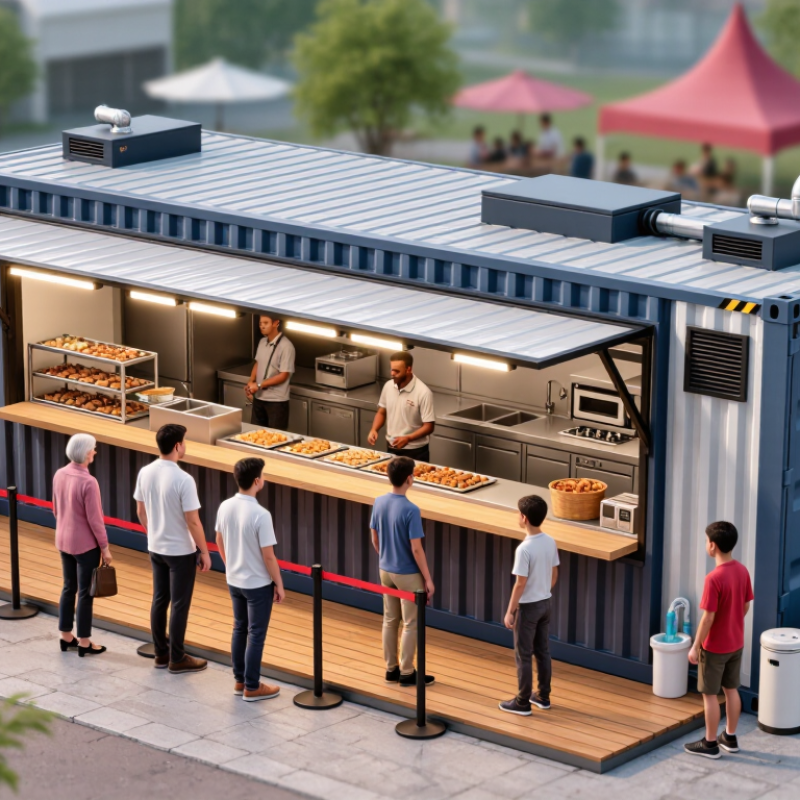
How to Choose the Best Container Concession Stands

Define Your Concession Stand’s Purpose and Operating Requirements

How to Choose the Best Container Concession Stands

Define Your Concession Stand’s Purpose and Operating Requirements

Start by defining what the stand must accomplish each day. A coffee-focused unit needs quick service, water access, storage, and space for grinders. A hot-food stand requires stronger ventilation, heat-resistant surfaces, and safe ingredient separation. Consider the customer flow, too. A narrow service window can create long lines during a busy lunch period.

Operating conditions matter just as much. Measure the available footprint, including clearance for staff, equipment, and delivery access. Check the electrical load before selecting cooking appliances. Confirm water, drainage, ventilation, fire safety, and sanitation requirements with qualified local professionals. These details affect the layout more than appearance does. In my experience, owners often choose attractive equipment first, then discover it blocks preparation space. That mistake is expensive. I still think compact layouts are easier to manage, but only when storage is planned carefully.

Tips: Sketch a full service cycle before buying anything. Mark where ingredients arrive, where meals are prepared, and where waste leaves. Keep cold storage near the prep counter. Leave clear paths around hot equipment. Test the layout with two people during a simulated rush. If they bump into each other, revise the plan. Small inefficiencies become tiring habits.

Compare Container Sizes, Layouts, and Customization Options

Choosing the best container concession stand starts with usable space, not appearance. A 20-foot container provides about 160 square feet externally, while a 40-foot unit offers roughly 320 square feet. The larger option supports separate cooking, storage, and service zones. However, it also increases transport, installation, and utility costs. The National Restaurant Association’s 2024 industry report projected U.S. restaurant sales above $1 trillion, showing strong demand for efficient foodservice spaces. Efficiency matters.

Layout should follow the customer journey. Place ordering near the service window, then position preparation equipment within one or two steps. Keep refrigeration close to cooking stations. A narrow linear layout saves room, but it can create staff congestion during peak periods. An L-shaped arrangement improves movement, although it may reduce storage capacity. I have found that operators often overestimate counter space and underestimate dry storage. That mistake is expensive.

Customization should match the menu, local climate, and expected volume. Add pass-through windows, washable wall panels, non-slip flooring, ventilation, lighting, and clearly marked utility access. The Grand View Research Foodservice Packaging Market report valued the global market at approximately $84.3 billion in 2023, with continued growth expected through 2030. That growth reflects rising demand for convenient service and takeaway operations. Still, sustainability claims require care. The report does not prove that every “green” material performs better. Compare durability, cleaning needs, waste systems, and replacement costs before choosing a finish.

Evaluate Materials, Safety Standards, and Weather Resistance

Choosing the best container concession stand starts with its materials. Food-contact surfaces should be smooth, nonporous, and easy to sanitize. Stainless steel is durable, while sealed composite panels can reduce weight. Avoid exposed wood near sinks and serving areas. It can absorb moisture and trap bacteria. Check welds, corners, and floor joints carefully. Small gaps often become difficult cleaning points.

Safety standards deserve equal attention. Ask for documentation covering electrical systems, fire protection, ventilation, and food-service construction. Components should match local building, fire, and health requirements. Doors need secure hardware, clear exits, and enough opening space for staff. Floors should resist slipping when wet. I once inspected a compact unit with excellent equipment but poor cable protection. It looked professional, yet the exposed wiring needed correction. Appearance is not evidence of safety.

Weather resistance determines whether the stand remains dependable outdoors. Look for corrosion-resistant fasteners, sealed roof joints, insulated walls, and drainage that moves water away from the entrance. Strong hinges and weatherproof lighting also matter during heavy rain or cold mornings. Heat can warp low-grade panels, while sunlight may weaken some seals. Ask how materials performed through seasonal changes, not only in showroom conditions. One detail is easy to miss: condensation can form inside walls. Proper insulation and ventilation help control it, though neither solution is perfect. Inspect seals regularly, especially after storms, because small failures rarely stay small.

Review Utilities, Equipment, Mobility, and Installation Needs

How to Choose the Best Container Concession Stands

Review Utilities, Equipment, Mobility, and Installation Needs

A container concession stand should match its site, not just its menu. I have seen attractive layouts fail because power loads were estimated too casually. The U.S. Department of Energy’s Better Buildings program reports that food-service buildings can use five to seven times more energy per square foot than other commercial buildings. Ask for a load schedule covering refrigeration, cooking equipment, ventilation, lighting, water heating, and peak demand. Confirm voltage, phase, drainage, water pressure, and backup capacity before fabrication. Small oversights become expensive repairs.

Equipment placement affects speed and safety. Keep chilled storage near preparation benches, and place cooking equipment beneath suitable ventilation. The 2022 FDA Food Code requires handwashing water to reach at least 100°F (38°C). That detail influences the water heater, plumbing route, and service access. Leave working clearance around removable panels and refrigeration coils. It may reduce selling space slightly. It usually improves maintenance.

Mobility adds another design question. Review axle limits, lifting points, road access, leveling methods, and connection time. A unit that moves weekly needs stronger fittings than one installed permanently. Electrical connectors should resist weather exposure, while hoses need protected, visible routes. The National Restaurant Association’s 2024 industry report identifies off-premises dining as a continuing customer expectation, supporting flexible service locations. Still, mobility is not automatically better. I would test the setup with staff, two full waste bins, and a busy lunch queue. That test may reveal an inconvenient truth: the most mobile stand can be the least efficient.

How to Choose the Best Container Concession Stands - Review Utilities, Equipment, Mobility, and Installation Needs

Evaluation Area Typical Requirement Recommended Specification Why It Matters Selection Check
Container Size Compact or medium food-service operation 10-foot or 20-foot container format The footprint affects equipment capacity, customer flow, transport, and site approval. Confirm external length, width, height, door swing, and usable internal floor area.
Electrical Supply Cooking, refrigeration, lighting, ventilation, and point-of-sale equipment Dedicated distribution board with circuit protection; commonly 230 V single-phase or 400 V three-phase, subject to local regulations Insufficient capacity can cause nuisance tripping, unsafe operation, or limited menu production. Calculate the combined rated load and confirm available amperage with a qualified electrician.
Water Supply Handwashing, food preparation, cleaning, and equipment filling Potable-water inlet, shut-off valve, water heater, sink, and backflow protection where required Reliable water service supports hygiene and helps meet food-service inspection requirements. Verify inlet location, pressure, drainage method, winter protection, and local plumbing rules.
Wastewater Management Greywater from sinks, cleaning, and food preparation Sealed drain connection or appropriately sized holding tank with access for emptying Poor drainage can create odors, sanitation risks, leaks, and site-compliance problems. Keep wastewater lines accessible and separate from potable-water components.
Ventilation and Extraction Hot cooking, steam, grease, and combustion by-products Commercial extraction hood sized by a ventilation professional, with make-up air where necessary Proper extraction improves air quality, temperature control, fire safety, and staff comfort. Check duct routing, discharge location, grease filtration, noise, and fire-code requirements.
Cooking Equipment Menu volume, cooking method, and peak service demand Select equipment by recovery time, output per hour, operating power, and cleaning access Equipment should match the menu rather than consume space or power unnecessarily. List every appliance, rated load, heat output, dimensions, and service clearance before ordering.
Refrigeration Perishable food, beverages, prepared ingredients, and cold storage Commercial refrigerator or under-counter units with visible temperature monitoring Adequate capacity helps maintain safe temperatures and reduces restocking interruptions. Allow ventilation around refrigeration equipment and plan for routine temperature checks.
Food-Contact Surfaces Preparation, assembly, serving, and cleaning areas Smooth, non-porous, corrosion-resistant surfaces with sealed joints Durable surfaces are easier to sanitize and less likely to harbor moisture or debris. Avoid exposed wood, open gaps, unfinished edges, and difficult-to-clean fasteners.
Service Windows and Counters Customer ordering, payment, handoff, and weather protection Lift-up or sliding service window with secure supports, counter space, and rain protection A well-planned opening improves queue flow and separates customers from preparation zones. Check opening height, counter depth, accessibility, locking, drainage, and wind resistance.
Mobility and Transport Frequent relocation between events or sites Certified lifting points, forklift pockets where appropriate, and a transport plan based on gross weight A fixed container may require lifting equipment, a suitable vehicle, and route planning. Confirm empty and operating weight, lifting method, access width, ground conditions, and permits.
Site Foundation Stable placement and level working conditions Level concrete pad, paving, steel supports, or engineered foundation suitable for the site A stable base protects doors, plumbing, equipment, and structural connections. Assess bearing capacity, drainage, leveling, flood exposure, and clearance from surrounding structures.
Weather and Thermal Control Outdoor operation in changing temperatures and weather Insulation, washable interior lining, air conditioning or heating, sealed openings, and roof drainage Thermal control protects staff, food quality, equipment, and customer comfort. Review local climate, condensation control, solar exposure, wind loading, and corrosion protection.
Fire and Life Safety Cooking appliances, fuel sources, electrical systems, and occupied workspace Appropriate extinguishers, emergency lighting, clear exit access, fire-rated components, and approved suppression where required Safety provisions reduce risk and may be mandatory for licensing and inspection. Obtain approval from the relevant fire authority before final installation.
Workflow and Ergonomics Fast service with limited interior space One-direction workflow: receiving, storage, preparation, cooking, assembly, and service Efficient layout reduces unnecessary movement, cross-contamination, and service delays. Mock up the layout at full scale and maintain safe working clearances around hot equipment.
Installation and Commissioning Delivery, utility connection, equipment setup, and operational testing Use qualified tradespeople for electrical, gas, plumbing, extraction, and structural work Professional installation supports safety, compliance, warranty conditions, and reliable operation. Prepare a connection schedule, inspection checklist, equipment manuals, and maintenance plan.
Permits and Compliance Food service, building, electrical, plumbing, signage, and land-use requirements Complete a local approval review before fabrication or site delivery Regulatory requirements vary by location and can affect layout, utilities, and operating costs. Confirm requirements with the local authority, food inspector, landlord, and utility providers.

Note: Requirements vary by location, menu, equipment load, operating capacity, and local regulations. Final electrical, plumbing, ventilation, structural, and fire-safety specifications should be reviewed by qualified professionals.

Assess Costs, Suppliers, Maintenance, and Long-Term Value

Choosing the Best Container Concession Stands

A container concession stand should fit your budget before it fits your vision. Compare purchase, transport, site preparation, utilities, equipment, permits, and installation costs. A low quoted price can hide expensive electrical upgrades or drainage work. Ask suppliers for itemized estimates. Request drawings, material specifications, delivery timelines, and warranty terms. Experienced suppliers should explain what their quote excludes.

Maintenance deserves careful attention. Select food-safe, washable wall panels and corrosion-resistant hardware. Inspect hinges, seals, plumbing connections, and refrigeration spaces before signing. I once reviewed a stand with attractive finishes but poor access behind the sinks. Small repairs became disruptive and costly. That mistake changed my inspection checklist. Leave service clearance around equipment, even when space feels limited. It matters later.

Long-term value depends on workflow, durability, and adaptability. Measure staff movement from storage to preparation and service windows. Crowded paths slow orders and increase fatigue. Ask whether counters, shelves, and appliances can be replaced without rebuilding the interior. A reliable supplier should provide maintenance guidance and responsive technical support. Check references from operators with similar climates and operating hours. Online reviews help, but direct conversations reveal more. Some estimates still miss seasonal transport costs. Keep a contingency fund for unexpected site work. A practical stand may look less impressive, yet it can deliver steadier returns over years.

How to Choose the Best Container Concession Stands

Estimated 10-year ownership costs help compare purchase price, installation, maintenance, and replacement requirements before selecting a supplier.

Planning benchmark in USD for a commercial food-service operation. Estimates exclude land rent, taxes, financing, and sales revenue; actual costs vary by size, equipment specification, local labor rates, climate, and permitting requirements.

FAQS

What materials are suitable for a container concession stand?

Choose smooth, nonporous food-contact surfaces. Stainless steel is durable and easy to sanitize. Sealed composite panels may reduce weight. Avoid exposed wood near sinks. Moisture can hide inside it.

Which areas need careful inspection before purchase?

Check welds, corners, floor joints, seals, and plumbing connections. Small gaps collect dirt and moisture. Inspect behind sinks too. Attractive finishes can distract from weak access points.

What safety documents should suppliers provide?

Request documents for electrical systems, fire protection, ventilation, and food-service construction. Confirm local building, fire, and health requirements. Appearance proves very little.

How can staff safety improve inside the stand?

Doors need secure hardware and clear exits. Floors should resist slipping when wet. Protect electrical cables properly. One polished unit I inspected still had exposed wiring.

How can I evaluate outdoor weather resistance?

Look for sealed roof joints, insulated walls, and corrosion-resistant fasteners. Check drainage around the entrance. Strong hinges and weatherproof lighting also help during storms.

Can insulation solve every outdoor weather problem?

No. Condensation may still form inside walls. Insulation and ventilation can reduce it, but neither is perfect. Inspect seals after heavy rain and seasonal changes.

Which costs should my budget include?

Include purchase, transport, site preparation, utilities, equipment, permits, and installation. Ask for itemized estimates. Confirm exclusions, delivery timing, drawings, and warranty terms. Cheap quotes can become expensive later.

How can I judge long-term value?

Measure movement from storage to preparation and service windows. Crowded paths slow orders and increase fatigue. Leave clearance around equipment. Keep a contingency fund for unexpected site work.

What maintenance features should I request?

Select washable wall panels and corrosion-resistant hardware. Check hinges, seals, refrigeration spaces, and plumbing. Appliances should be replaceable without rebuilding the interior. Small repairs become disruptive when access is poor.

Conclusion

Choosing the best Container Concession Stands begins with defining how and where the unit will operate. Consider the menu, expected customer volume, service workflow, storage requirements, and whether the stand will remain in one location or move regularly. Compare container sizes, interior layouts, serving windows, counters, signage areas, and customization options to create an efficient and welcoming space. The design should support smooth staff movement while making the customer experience convenient.

Durability and safety are equally important. Review construction materials, insulation, ventilation, weather resistance, electrical systems, plumbing, and sanitation features to ensure the stand can perform reliably in its intended environment. Confirm that all required equipment, utilities, transportation, and installation needs are practical before purchase. Finally, evaluate the total cost, supplier support, warranty coverage, maintenance requirements, and expected lifespan. A slightly higher initial investment may provide better efficiency, lower operating expenses, and stronger long-term value when the stand is thoughtfully designed and properly maintained.

Charlotte

Charlotte

Charlotte is a professional marketing specialist with a strong understanding of the company’s products, services, and customer needs. With a thoughtful, research-driven approach, she regularly contributes expert articles to the company website, sharing practical insights, helpful guidance, and......